
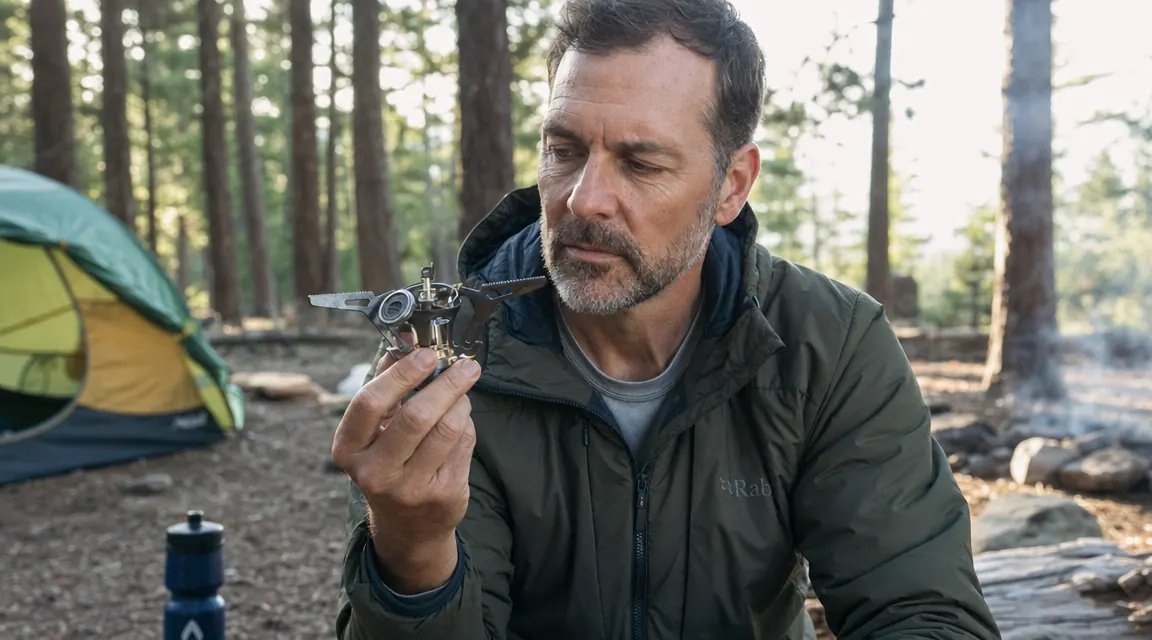
Here is the thing about the MSR PocketRocket 2: it gets recommended so often, by so many gear sites and hiking forums, that most people buy it before they fully understand what it is. It is a bare burner head. That is it. No pot, no windscreen, no igniter backup, no way to know how much fuel is left in your canister. It weighs 2.6 ounces and it does its one job very well. But if your mental image of 'backpacking stove' is closer to a Jetboil, where you twist a knob, press a button, and a cup of hot coffee appears in four minutes with zero fuss, then the PocketRocket 2 is going to feel like half a product when it arrives.
I have been carrying the MSR PocketRocket 2 for years. I recommend it to most people who ask me. But there are three specific situations where I now tell people to buy something else instead, and most reviews online never bring those up. This is the version of the review I wish I had read before I bought my first one.
The Quick Verdict
Excellent stove for experienced backpackers who already own a good pot and know how to manage a campsite. Underwhelming out of the box for beginners who want a simple plug-and-play system.
Amazon Check Today's Price →If you already have a pot and know what you are getting into, this is the stove to buy.
The MSR PocketRocket 2 has a 4.8-star rating from over 4,000 Amazon reviews and has been the benchmark ultralight canister stove for over a decade. It delivers on that reputation, with the caveats covered below.
Amazon Check Today's Price on Amazon →What I Mean by Testing It Honestly
I am a weekend backpacker and campsite host. I have shared a trailhead parking lot with thousands of campers over the years, answered gear questions at lean-tos and shelters, and watched plenty of first-timers struggle with equipment that got five stars online but did not match their expectations in the field. I carry the PocketRocket 2 myself, so I know its capabilities from repeated real use. I also know what questions to ask when someone shows up at camp frustrated that their new stove is not working the way they expected.
For this review I am going to focus specifically on the gaps: the things most buyers do not know going in, the situations where the stove genuinely underperforms, and the alternatives worth considering depending on your camping style. If you want a full account of consistent daily use across many trips, I covered that in my long-term MSR PocketRocket 2 review. This is a different kind of look.
The Wind Problem Is Worse Than Most Reviews Admit
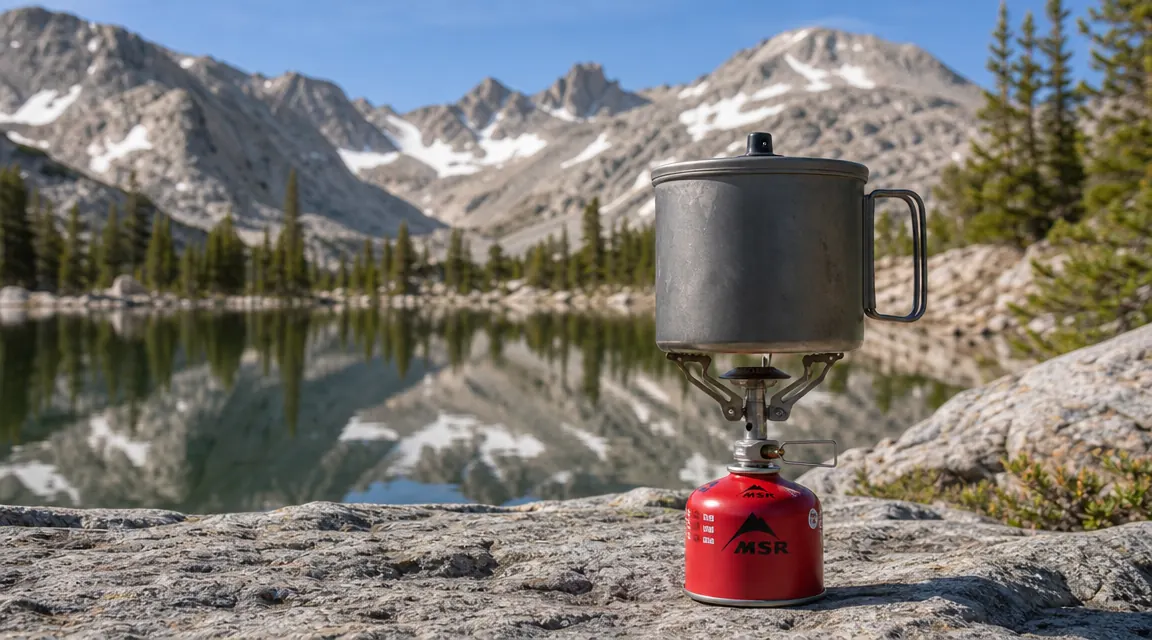
Every review of the PocketRocket 2 mentions wind performance as a weakness. What most reviews do not explain is why, and how much worse it gets in specific environments. The burner head on this stove is open flame, no shroud, no integrated windscreen. The pot sits directly on four folding arms above the flame. In still conditions that is ideal: nothing impedes heat transfer, boil times are fast. In wind, even a light sustained breeze of 8 to 10 mph, the flame blows sideways, curls under the pot, or gutters out entirely. Your boil time can go from 3.5 minutes to 9 minutes without any other variable changing.
The standard workaround is to position the stove behind a rock, your body, or your pack. That works most of the time at sheltered campsites below treeline. The problem is that 'most of the time' is not the same as 'reliably.' If you regularly camp above treeline, on exposed ridges, at desert canyon rims, or on coastal sites where there is no natural windbreak, the PocketRocket 2 will frustrate you on a meaningful percentage of your trips. This is not a minor asterisk. It is a genuine limitation of the open-burner design that no windscreen accessory fully solves, because MSR explicitly warns against wrapping a foil screen around the canister due to heat buildup risks.
There is a version of this stove built for wind: the MSR WindBurner. It has an integrated radiant burner and an enclosed system that handles gusts the PocketRocket 2 cannot. If more than 25 percent of your trips involve genuinely exposed campsites, buy the WindBurner instead. The PocketRocket 2 is a sheltered-site stove that happens to go on windy trips sometimes, not a wind-capable stove.
The Igniter: Do Not Plan Around It
The MSR PocketRocket 2 has a piezo igniter, that little clicker that sparks the flame when you push a button. In the product photos and most demo videos, it works cleanly and looks slick. In the field, it is the part of this stove I trust least. At temperatures below 35 degrees Fahrenheit, it becomes unreliable. When a canister is down to its last third, the lower pressure makes ignition harder and the piezo has to work against a weaker gas flow. After a year or two of regular use, the spark gap can drift and the click becomes intermittent.
None of this is unique to the MSR PocketRocket 2. Piezo igniters on canister stoves across every brand have these same issues. The honest point is that the igniter should be treated as a convenience feature, not a reliability feature. If you go into the field counting on that clicker to start your stove on a cold morning, you are going to have a bad morning eventually. Carry a BIC lighter. Keep it in your hip pocket in cold weather so body heat keeps it functional. This is not a workaround for a defective stove, it is standard practice for any canister stove with an igniter.
What bothers me is that the igniter contributes to a perception of the PocketRocket 2 as a 'push-button easy' stove, which sets up a gap between what buyers expect and what they get in real conditions. If you want truly fuss-free ignition, the Jetboil Flash uses an auto-igniter that works more consistently because the enclosed system maintains a more reliable gas-to-air ratio at the burner. That is one of several reasons the Jetboil is worth the higher price for certain users.
The piezo igniter is a convenience feature. Carry a lighter anyway. Every experienced backpacker does. The stove is not the problem, the expectation is.
Simmer Control: Good for a Bare Stove, Not Great Compared to Integrated Systems
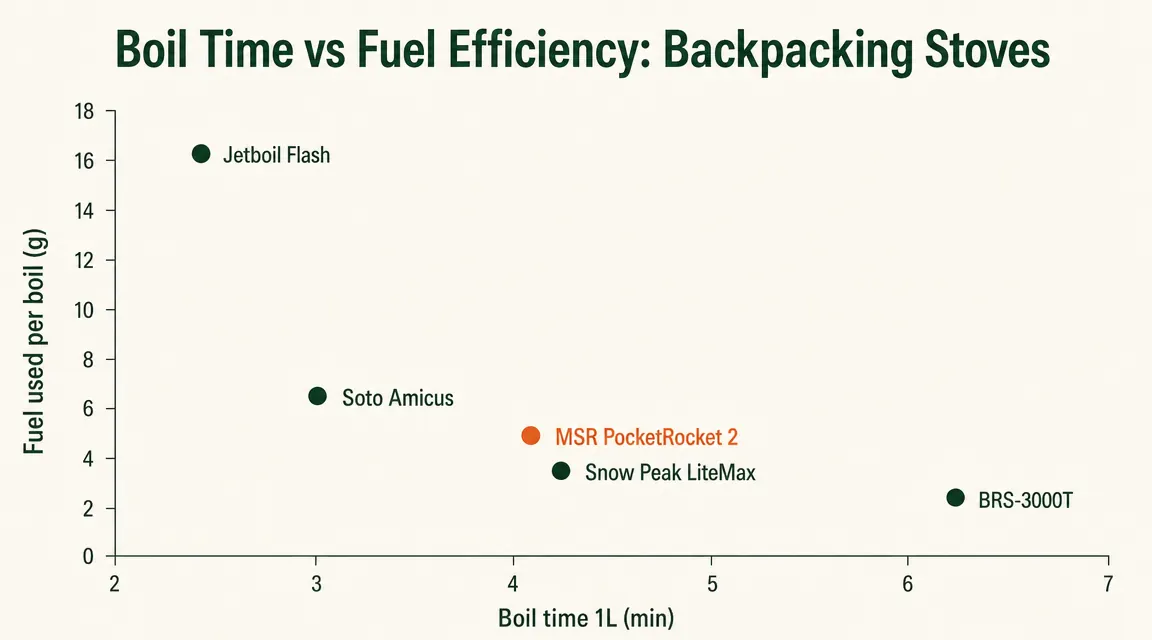
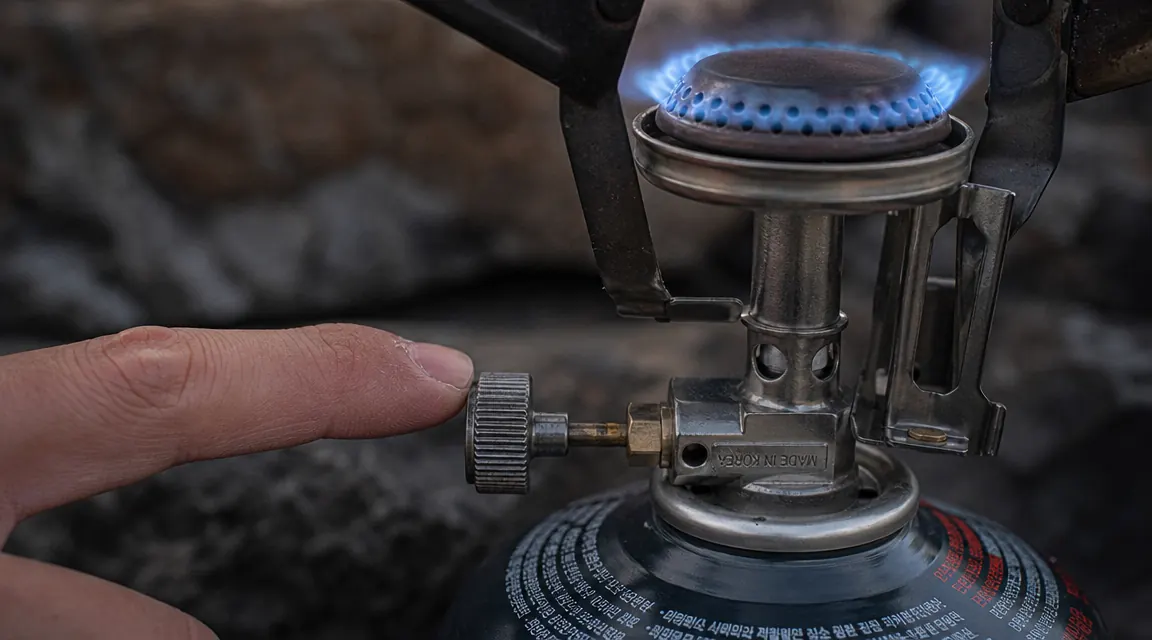
The PocketRocket 2 has a smooth valve that gives you genuine flame modulation from a roaring boil down to a low simmer. For a standalone canister stove in this weight class, that is legitimately above average. I want to be clear about that because some budget alternatives, including the BRS-3000T I have tested, have valves that essentially go from off to full blast with not much useful range in between. The PocketRocket 2 is better than most at this.
The issue is that 'good for a bare stove' is a relative benchmark. When you are trying to actually simmer something, rehydrated rice, a sauce, anything that burns if the heat is too high, a bare open-flame burner heating an unshrouded pot has inherent hot spots. The heat concentrates in the center of the pot. You need to stir frequently, keep the flame low, and pay attention. If the wind is shifting, your simmer drifts. None of this is unique to the PocketRocket 2. It is a characteristic of the form factor.
An integrated system like the Jetboil Flash uses a heat exchanger fin on the base of its cup that distributes heat much more evenly, which produces a more controlled simmer with less stirring and less burn risk. If you plan to do more than boil water, meaning actual one-pot cooking, that difference matters more than the weight and price gap between the two systems. The PocketRocket 2 is better suited to a boil-and-add cooking style: freeze-dried meals, instant oatmeal, anything that just needs hot water poured in.
The True Cost of Getting Started
The PocketRocket 2 lists for around $49. That number does not include a pot, a fuel canister, or a lighter. A decent lightweight titanium or hard-anodized aluminum pot sized for one to two people runs $25 to $45. A 100-gram fuel canister runs $6 to $10. You are now at $80 to $100 before you have cooked your first meal. A Jetboil Flash, which includes the stove, an insulated cup, a lid that doubles as a strainer, and a heat exchanger cup that measurably outperforms the open-pot setup, runs around $120. The price gap between building a PocketRocket 2 system from components and buying a Jetboil from scratch is smaller than most buyers realize.
Where the PocketRocket 2 wins on price is if you already own a good camp pot and just need a burner upgrade. If you are starting from zero, price out both before assuming the PocketRocket 2 is the budget choice. It often is not, once you account for all the components.
The Jetboil Gap: What an Integrated System Actually Gives You
I want to spend some time on this because it is the most common buying mistake I see among newer backpackers. The Jetboil Flash is the obvious comparison to the PocketRocket 2. Same basic technology, isobutane-propane canister, similar weight class, similar niche. The differences that matter are system-level, not spec-level.
First: the Jetboil's heat exchanger cuts boil time to around 100 seconds for half a liter. The PocketRocket 2 in equivalent conditions takes 2 to 2.5 minutes for the same amount of water. Over a week of two boils per day, that time adds up, but more importantly, the enclosed cup design means the Jetboil is largely wind-resistant by default. You do not have to think about positioning. You do not have to track down a rock to hide behind.
Second: the Jetboil's cup doubles as a cooking vessel, a drinking vessel, and a storage container for the stove and canister during transport. That integration reduces your total gear count and the number of decisions you make at camp. For a beginner who wants to minimize complexity, that has real value.
The tradeoffs: the Jetboil Flash is heavier than the PocketRocket 2 plus a pot by a few ounces, the cup shape is awkward for cooking anything beyond boiling, and the system costs more. For an experienced lightweight backpacker who already owns a pot they like and camps in mostly sheltered terrain, the PocketRocket 2 is the better call. For a first-time backpacker who wants simple, fast, and fuss-free in any conditions, the Jetboil is worth the extra cost. Recommending the PocketRocket 2 to every backpacker regardless of experience or camping style is what most gear sites do. I do not think that is honest advice.
What I Liked
- 2.6 ounces makes it irrelevant in a loaded pack, you will never leave it home
- Fast boil times in calm to moderate conditions, matching MSR's 3.5-minute claim
- Works with any Lindal-valve canister regardless of brand
- Valve modulation is noticeably better than budget alternatives
- Compact storage case fits inside most lightweight pots for zero extra footprint
- 4.8-star rating from over 4,000 buyers reflects genuine durability and performance
Where It Falls Short
- Open-burner design loses significant performance in sustained wind with no safe windscreen fix
- Piezo igniter is a convenience feature only, not dependable in cold or at low canister pressure
- No fuel gauge or indicator on canister, you are guessing your remaining fuel unless you weigh it
- Sold as a bare stove, pot adds significant cost for buyers starting from scratch
- Simmer quality falls short of integrated heat-exchanger systems for actual cooking
The Canister Fuel Problem Nobody Mentions
Here is a small but genuinely annoying thing: you cannot easily tell how much fuel is left in an isobutane canister. The pressure inside a Lindal-valve canister stays roughly constant until the canister is nearly empty, so the flame does not noticeably weaken until you are down to the last 10 to 15 percent. If you have three canisters in your gear bin and each one has some fuel left from a previous trip, you have no reliable way to know which one will last through your next trip without weighing them against the labeled empty weight.
This is not a PocketRocket 2 problem specifically, it is a canister-stove problem across the category. But it is worth flagging because it trips up beginners and occasionally catches experienced campers too. The practical fix is simple: start each multi-day trip with a fresh canister, or weigh your partial canisters before you pack. A 100g MSR IsoPro canister weighs about 100g empty. Buy a small kitchen scale and keep it in your gear tote. Five minutes of checking before a trip prevents the specific misery of running out of fuel on day three.
Who This Is Actually For
The MSR PocketRocket 2 is the right stove for a backpacker who already has a pot they like, camps primarily in areas with natural windbreaks or below treeline, cooks mostly boil-and-add meals, and values weight savings over system simplicity. It is also a strong upgrade for someone moving off a budget no-name burner who wants reliable flame control and a stove that will genuinely last many years of regular use. If that describes you, I do not think you will regret buying it. The 4.8-star rating from thousands of buyers is not manufactured, it reflects a stove that does its job consistently. You can find pricing and availability on my PocketRocket 2 vs BRS-3000T comparison if you want to see how it stacks up against the main budget competitor.
Who Should Skip It
Skip the PocketRocket 2 if you are a first-time backpacker who wants the simplest possible cooking system and does not want to think about wind, ignition, or purchasing a separate pot. Buy a Jetboil Flash. Skip it if your regular camping areas are exposed, above treeline, or coastal. Buy the MSR WindBurner. Skip it if most of your cooking involves actual simmering rather than boiling water. The integrated heat exchanger on a Jetboil or MSR Reactor will make your camp meals noticeably better. And skip it if you are building a kit from zero and doing price math expecting it to be the budget option. Price out the full system before deciding.
Know what you are getting into and it is one of the best stoves you can buy.
The MSR PocketRocket 2 earns its reputation among backpackers who use it for what it is built for. Check the current price and make sure it is the right fit for your kit before you order.
Amazon Check Today's Price on Amazon →