
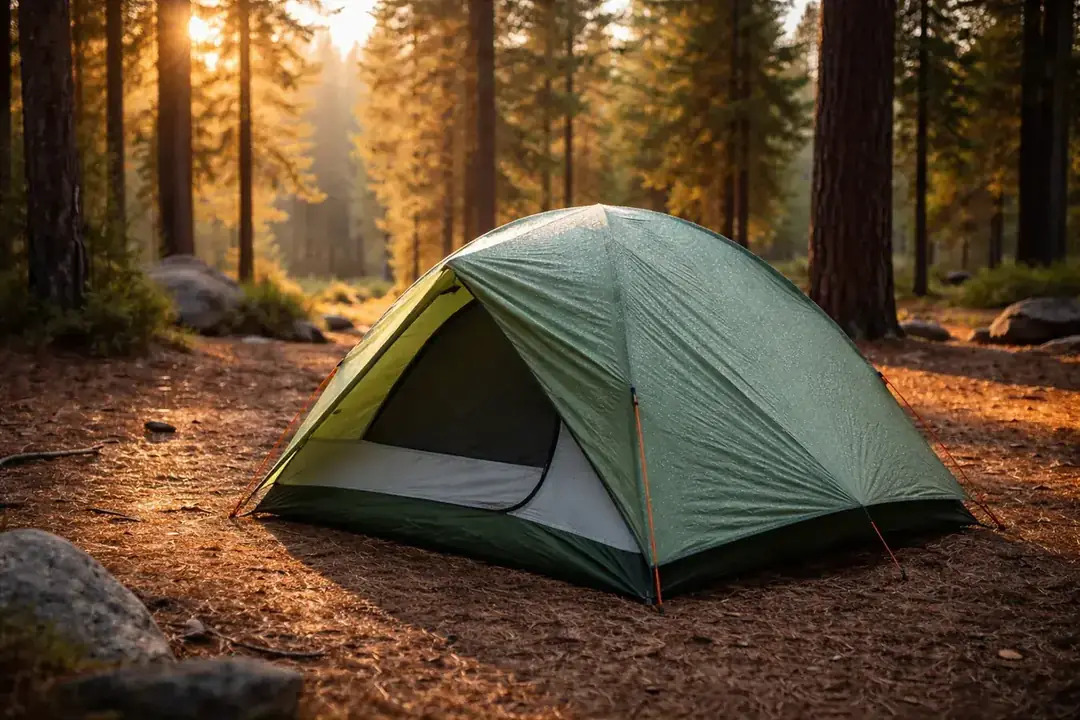
I bought the Clostnature 2-person backpacking tent in late November after my old Big Agnes shed a pole sleeve on a trip near Lake Tahoe and left me duct-taping at 11 p.m. I wanted something under $100, under 4.5 pounds for a 2-person shelter, and simple enough to pitch alone in the dark without consulting a manual. I figured I would use it for a season, find the deal-breakers, and upgrade later. Six months and fourteen weekend trips later, I still have not pulled the trigger on an upgrade.
That is the short answer. The longer answer has some real nuances, because this tent is not perfect. The stakes it ships with are borderline useless in hard-packed soil, the vestibule is cozy-sized at best, and the interior headroom will remind you that ultralight designers do not prioritize sitting up straight. But at its price, the Clostnature Lightweight Backpacking Tent covers the things that matter most: it sheds rain reliably, it sets up fast once you learn it, and it has held up through wind, one proper downpour, and a late-season frost with no drama.
The Quick Verdict
A genuinely solid budget backpacking tent that earns its place in the pack, as long as you swap the stock stakes and set realistic expectations on vestibule space.
Amazon Check Today's Price →If your current tent weighs more than your sleeping bag, it's time to look at this.
The Clostnature 2-person backpacking tent is one of the few budget options with both a full-coverage rain fly and a double-wall design. Check the current price on Amazon before the next trip sneaks up on you.
Amazon Check Today's Price on Amazon →How I've Used It: 14 Trips, 4 Different Conditions
My usual routine is car camping at developed sites on Friday nights when I am short on time, and then 1-to-2 night backpacking trips on longer weekends. The Clostnature has done both. On car camping nights I often let my 11-year-old nephew Eli help pitch it, which is a real-world test of the setup system. On backpacking trips I have taken it solo to the Desolation Wilderness and with a friend into the Trinity Alps. Pack weight matters to both of us, so at 4.2 lbs (with rain fly and stakes), this tent stays in rotation.
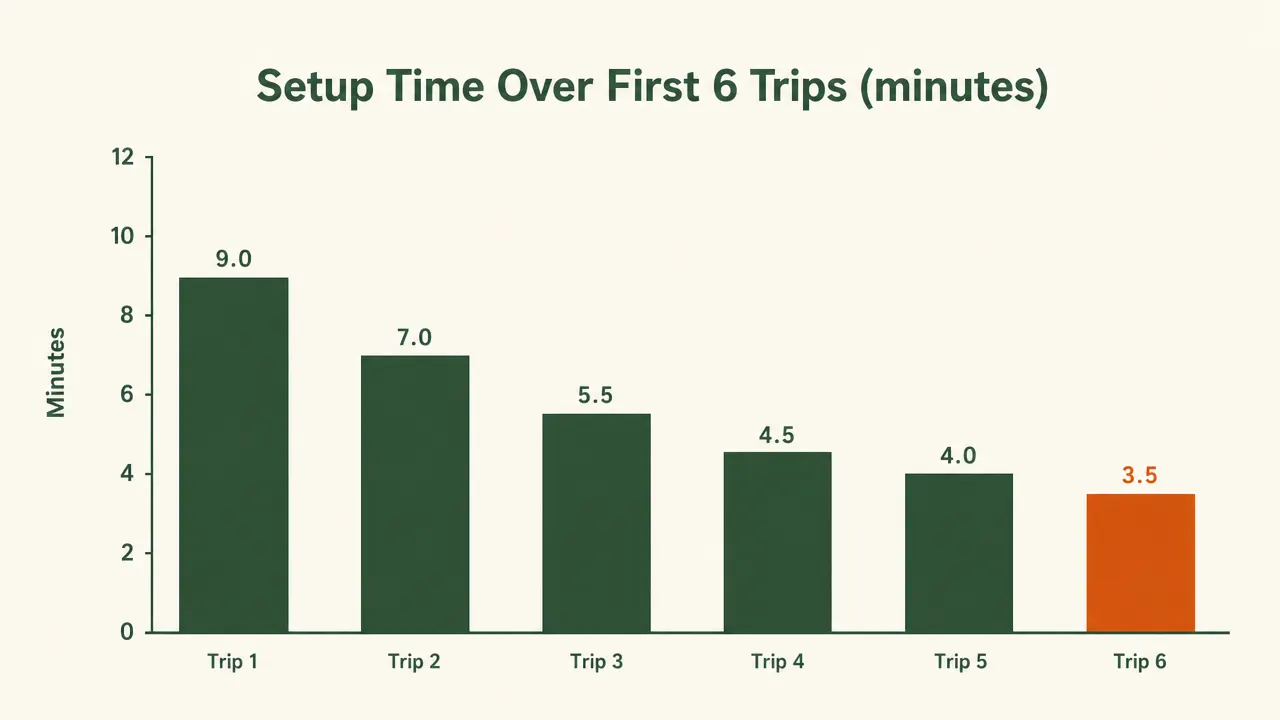
The fourteen trips covered four distinct conditions. Five dry-weather nights in Sierra Nevada meadows, spring temps around 40-55 degrees Fahrenheit. Four nights with significant rain, including one 6-hour downpour in the Trinity Alps in April. Three nights with sustained wind between 15 and 25 mph at exposed ridge campsites. Two nights of light frost, with morning temps dropping to 28 degrees Fahrenheit. One night I came back to the tent after dark and had it up in just under four minutes, which felt like a real milestone. The first time I set it up it took nine minutes and I swore at the clip system twice.
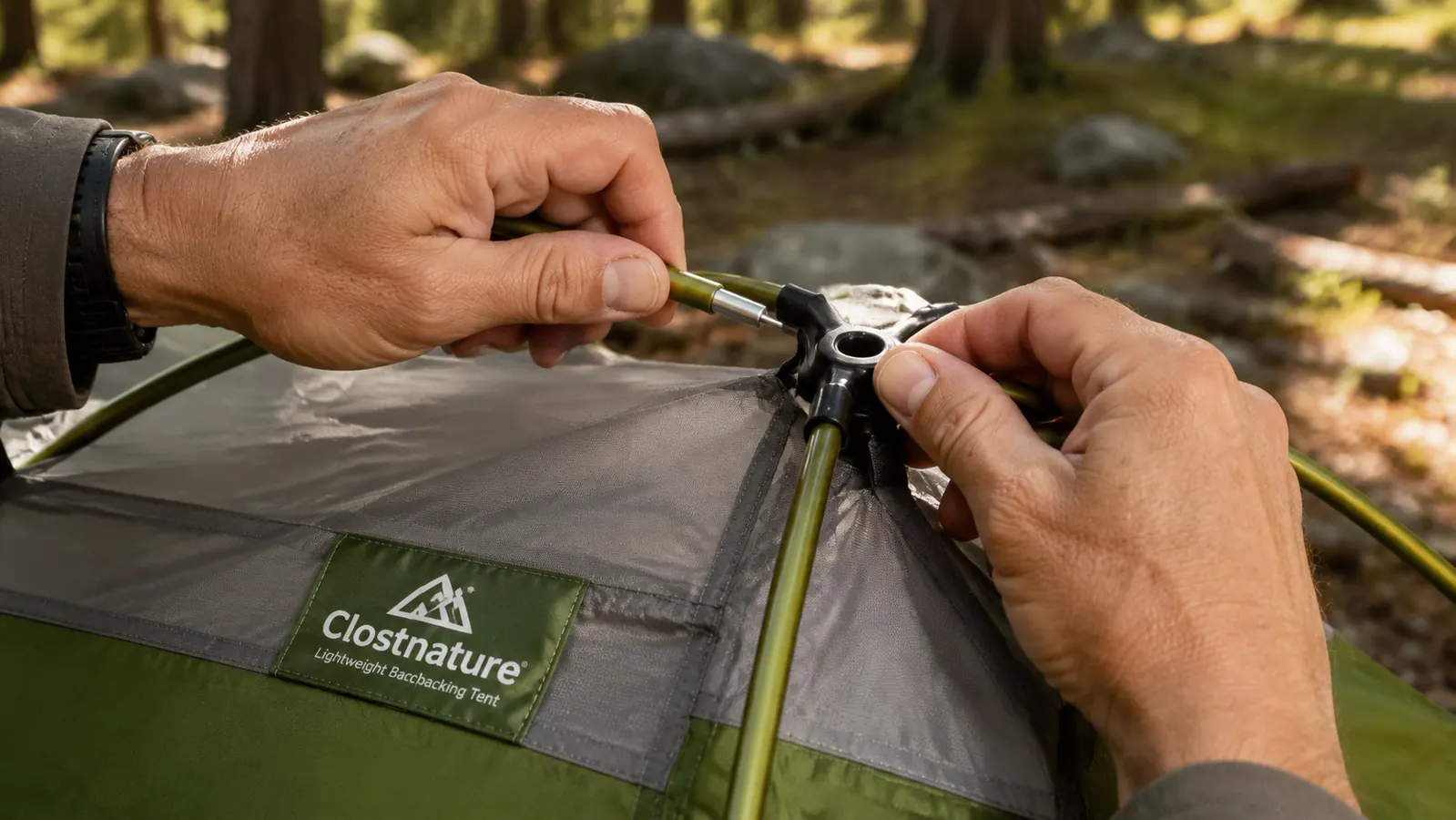
The learning curve on setup is real but short. The freestanding hub pole system means no awkward threading; you clip the tent body to the poles from the outside, which is faster than traditional sleeve designs. By trip three, I had it down. If you are new to backpacking tents, give yourself two practice sessions in the backyard before you need it in the dark.
Weatherproofing: Where It Earns Its Keep
The April downpour in the Trinity Alps was the real test. Six hours of steady rain, plus a period of about 45 minutes with heavy enough rain that I could hear it drumming on the rain fly. I had a dry sleeping bag and a dry sleeping pad the next morning. The floor seams held. The rain fly coverage reaches close to the ground on the windward side, which matters more than most people realize because wind-driven rain does not fall straight down.
The rain fly is a separate piece from the inner tent body, which is standard on any double-wall design and required for real weather protection. Single-wall budget tents save a few ounces but sweat condensation onto your gear all night. The gap between the mesh inner and the fly is where condensation forms and drips harmlessly to the ground instead of onto your sleeping bag. If you are looking at single-wall alternatives under $70, understand what you are trading away.
Six hours of steady rain, 45 minutes of heavy drumming on the fly, and I woke up to a dry sleeping bag. That is the only performance metric that actually matters.
Wind performance has been adequate. On a ridgeline near Sonora Pass with gusts I estimated at 20-25 mph, the tent flexed but did not stress audibly. The two main poles cross in a way that distributes load reasonably well, and the low profile helps. I added two extra guy-out cords on exposed nights, which any experienced backpacker should do anyway regardless of tent brand. If you are camping on fully exposed ridgelines in serious mountain weather, this is a fair-weather-and-moderate-weather shelter, not a four-season mountaineering tent.
Weight, Pack Size, and What That Actually Means for Your Back
At 4.2 lbs including the rain fly, poles, and stakes, the Clostnature is not ultralight. A Big Agnes Copper Spur HV UL2 goes out at about 2.7 lbs. A Zpacks Duplex is under 1.5 lbs. Both cost four to ten times as much. For the budget range, 4.2 lbs is competitive. The Marmot Tungsten 2P is 5.5 lbs. The REI Co-op Passage 2 is 5.1 lbs. So in the real-world budget market, the Clostnature saves you about a pound over those alternatives.
That pound matters over 8 miles. On my Trinity Alps trip I carried 34 lbs total over a 9-mile approach. A pound saved on the shelter means I could carry extra food, or just carry less weight in my knees by the end of the day. If you are packing under 20 miles per trip, the difference between 4.2 and 5.1 lbs might not register. If you are going farther, or if you are like my buddy Dave, who has a bad left knee from a 2019 ski fall, every ounce is a conversation you want to have before you leave the trailhead.
The packed size stuffs into a 6.5 x 17 inch cylinder, which sits neatly against the back panel of a 40-liter pack without eating the whole bag. I have also strapped it to the outside of a pack without issue on day trips where I expected to overnight but wanted flexibility. The stuff sack is fine but not compression-style; you can compress it tighter with a separate dry bag if you really want to maximize pack efficiency.
What the Clostnature Gets Wrong: Three Real Complaints
The included stakes are aluminum tent pegs that bend if you look at them sideways in hard soil. On a car camping trip at a developed site in the Sierra foothills, the ground was sun-hardened clay and I bent two of the six included stakes trying to get them seated. I now carry a set of MSR groundhog stakes when I expect anything harder than soft forest duff. Budget $15 for a set of real stakes before your first serious trip, and think of the Clostnature kit price as the tent plus whatever stakes you already own.
The vestibule is functional but not generous. At 10.8 square feet per side (the tent is technically double-vestibule), you can store a pair of boots and a small pack under each side, but you cannot cook under the vestibule in the rain without your elbow situation getting complicated. If you are a solo camper using this as a 2-person tent for extra space, the vestibule works well. For two adults with full packs, you are making decisions about what stays outside under the fly versus what comes in the door.
Condensation management is the third limitation, and it is shared by most tents in this price range. The mesh inner tent vents reasonably well in most conditions, but on cold calm nights when humidity is high, you will wake up to moisture droplets on the inside of the rain fly and some of those will drip. This is physics, not a manufacturing defect. Leaving the vestibule zip cracked an inch on one side helps. It is the same tradeoff you get on every double-wall tent under $200. If you have camped in one before, you know the workaround.
What I Liked
- Rain fly coverage is genuinely good: reached ground level and kept the interior dry through a 6-hour downpour
- Double-wall design prevents the sweaty-condensation problem you get with single-wall budget alternatives
- Freestanding hub pole system sets up faster than sleeve designs once you practice twice
- 4.2 lbs is a full pound lighter than comparable-priced alternatives like the REI Passage 2
- Two vestibule doors means two people can enter and exit without crawling over each other
- Color and construction quality both exceed what the price suggests
- 4.6-star rating across 2,946 Amazon reviews backs up the field experience
Where It Falls Short
- Included stakes are too thin for hard-packed soil; plan to replace them before your first real trip
- Vestibule space is tight for two adults with full packs; not a cooking shelter in rain
- Interior headroom (43 inches at peak) means sitting upright with a hat on is technically possible but not comfortable
- Condensation on the fly on cold, humid nights will drip if you do not leave a vestibule gap cracked open
- The stuff sack is not a compression sack; packs slightly larger than some competitors at the same weight
How It Handles Solo Use vs. True 2-Person Camping
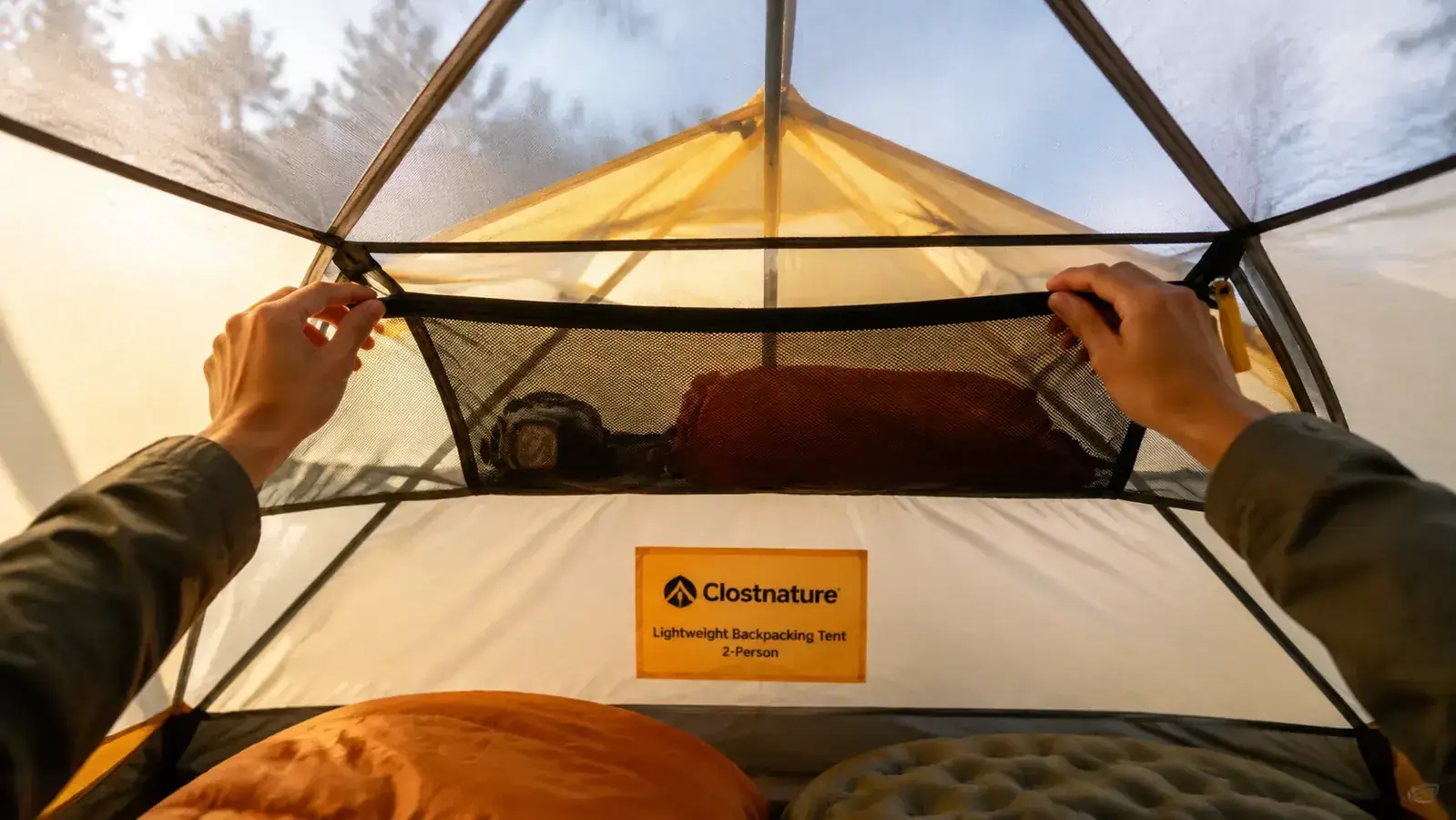
Most of my trips in this tent have been solo. Used alone, the Clostnature 2-person is excellent. The interior floor is 29 square feet, which gives a solo backpacker room to sleep, keep their pack inside on wet nights, and not feel like a sleeping bag stuffed into a cardboard tube. I can sit up and change layers without opening the door. Gear that needs to stay dry comes inside with me. This is the configuration I would recommend to most solo backpackers on a budget, because you get the durability and weather protection of a larger shelter at a weight that stays manageable.
True 2-person camping in this tent is workable for two people who like each other and are not tall. My buddy Dave is 6 feet and 195 lbs; I am 5-11 and 175 lbs. When we shared this tent in the Trinity Alps, we fit, but it was cozy in the way that every 2-person backpacking tent under 5 lbs is cozy. Head-to-head sleeping with two sleeping bags and two pads, neither of us was uncomfortable, but neither of us had room to roll over without briefly negotiating. For couples or close friends on occasional trips, totally fine. For strangers or coworkers trying to split pack weight at a company retreat, read the dimensions first.
Alternatives I Considered and Why I Kept Coming Back to This One
Before settling in with the Clostnature, I compared it seriously to three alternatives. The REI Co-op Passage 2 costs more, weighs more, and the vestibule is only marginally bigger. For an REI member the warranty and return policy add real value, but on pure tent specs the Clostnature wins at this price tier. The Kelty Grand Mesa 2 is a frequent comparison in online forums and I cover it in detail in my piece on how it stacks up against the Kelty Grand Mesa, but the short version is that the Kelty is heavier and the rain fly coverage is less complete. The Teton Sports Mountain Ultra was an option I briefly considered; lighter, but the interior dimensions are noticeably smaller and the user reviews on the zipper quality made me nervous.
If I had an extra $150 to spend, I would look at the MSR Elixir 2 or the Big Agnes Copper Spur HV UL2. Both are meaningfully better in durability, packed weight, and interior livability. But neither is $95, and the gap in performance over the Clostnature on a typical weekend trip is not proportional to the price gap. For beginners, occasional backpackers, and weekend campers who want a real tent without a real tent budget, the Clostnature fills that space honestly. There is also a reason that if weight is your primary concern and you want to understand why it matters so much, my breakdown of 10 reasons a lightweight tent makes or breaks a backpacking trip walks through the tradeoffs in detail.
Who This Is For
The Clostnature 2-person tent is the right buy if you camp 5 to 20 nights a year, you carry your own gear for at least some of those trips, and you want a shelter that handles actual weather without a three-year gear loan program. It rewards people who spend 20 minutes practicing the setup before the trip. It works best for solo backpackers using the extra space, or couples willing to sleep cozy. If your camping is mostly car camping with occasional overnight hikes, this tent is more than you need but not more than you will appreciate. The build quality will outlast most people's commitment to the hobby.
Who Should Skip It
Skip the Clostnature if you are two adults who each have large sleeping pads and expect to spread out, or if you will be camping in sustained severe weather where a bombproof four-season shelter is necessary. Skip it if you plan to base camp and want a tent tall enough to sit up fully and organize gear inside over the course of multiple days. Skip it if the included-stakes problem bothers you conceptually, because while the fix is easy and cheap, some buyers have a reasonable expectation that the kit that ships with a tent should work without modifications. And if you are a fastpacker or ultramarathon runner who cares about every quarter-ounce, you should be looking at tarps and ultralight single-wall options with the full understanding of the tradeoffs involved.
Six months of weekends later, it's still in my pack rotation.
If you're ready to stop wrestling with a borrowed tent that leaks at the seams, the Clostnature is a solid first step into real backpacking shelter. Nearly 3,000 Amazon reviews and a 4.6-star rating tell the same story my 14 trips did. Check today's price and see what size options are currently in stock.
Amazon Check Today's Price on Amazon →