
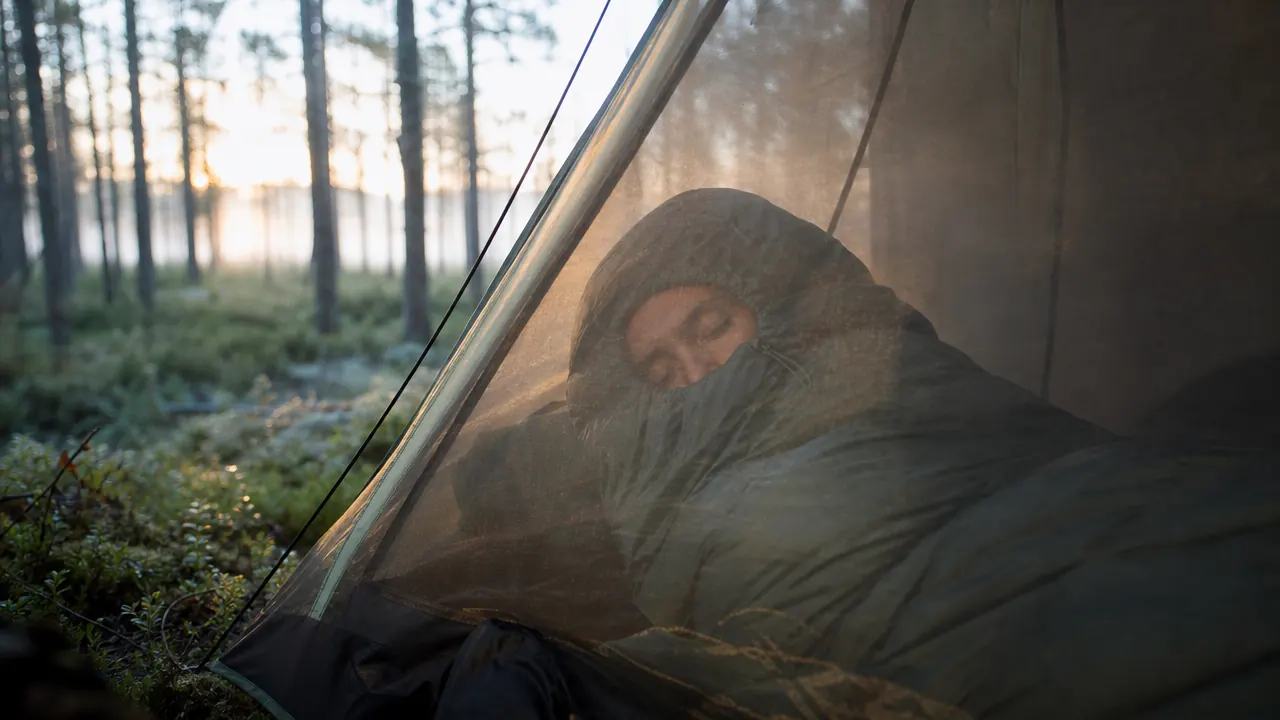
Last October I was three miles into a backcountry loop in the Ozark National Forest when the front pushed through faster than my weather app had promised. Temperature dropped to 27 degrees Fahrenheit by midnight. I was in my VENTURE 4TH sleeping bag, the 3-season mummy rated to 32 degrees. I will be honest with you: I did not sleep like a baby. But I slept. I was cold-ish but comfortable enough to actually rest, and I woke up dry. For a bag that costs roughly what a decent restaurant dinner runs you, that is the real test result that matters.
I had been looking for a second bag to keep in my car camping kit so my main quilts could stay packed for ultralight trips. A 54-dollar mummy bag from a brand I had never touched felt risky, but over 6,000 Amazon reviews pointed at something worth trying. That was in April of last year. Since then I have put the VENTURE 4TH through around 30 overnight trips across Oklahoma, Arkansas, Colorado, and two rainy weekends in Tennessee. Here is what two full seasons actually looked like.
The Quick Verdict
Solid 3-season mummy bag that punches well above its price, though you should treat the 32F rating as a 38-40F practical floor unless you sleep warm.
Amazon Check Today's Price →Cold nights are coming. Is your current bag actually rated for them?
The VENTURE 4TH 3-season mummy bag carries 4.6 stars from over 6,300 buyers. Check today's price on Amazon before it ticks up heading into fall.
Amazon Check Today's Price on Amazon →How I've Used It
My camping style runs the full spectrum. Some weekends I am car camping with a full cooler and a camp chair; other trips are 10-mile overnight backpacking loops where every ounce matters. For this review I used the VENTURE 4TH almost exclusively as my car camping bag and base-camp bag, not on ultralight trips where a down quilt would be my first choice anyway. That is the honest use-case frame here. If you are planning to summit anything above 11,000 feet in October, this is not the bag I would send you to. But for the 90% of camping the average person actually does, the field test covers real ground.
My body temperature runs slightly cold. I am a 39-year-old male, 175 pounds, and I tend to sleep on the cooler side compared to most people I camp with. I mention this because temperature ratings on sleeping bags are notoriously optimistic, and my personal experience will skew colder than what a warm sleeper would report. Keep that in mind when I talk about the thermal performance section below.
For conditions, the 30 trips covered overnight lows from 62 degrees down to 27 degrees Fahrenheit. I used the bag without a liner on most trips, with a fleece liner on three winter-shoulder-season nights. I slept on a variety of pads, from a Therm-a-Rest NeoAir down to a cheap 1.5-inch foam pad. Pad insulation affects how warm a bag feels more than most people realize, so I will flag where that was a factor.
Thermal Performance: What the 32F Rating Actually Means
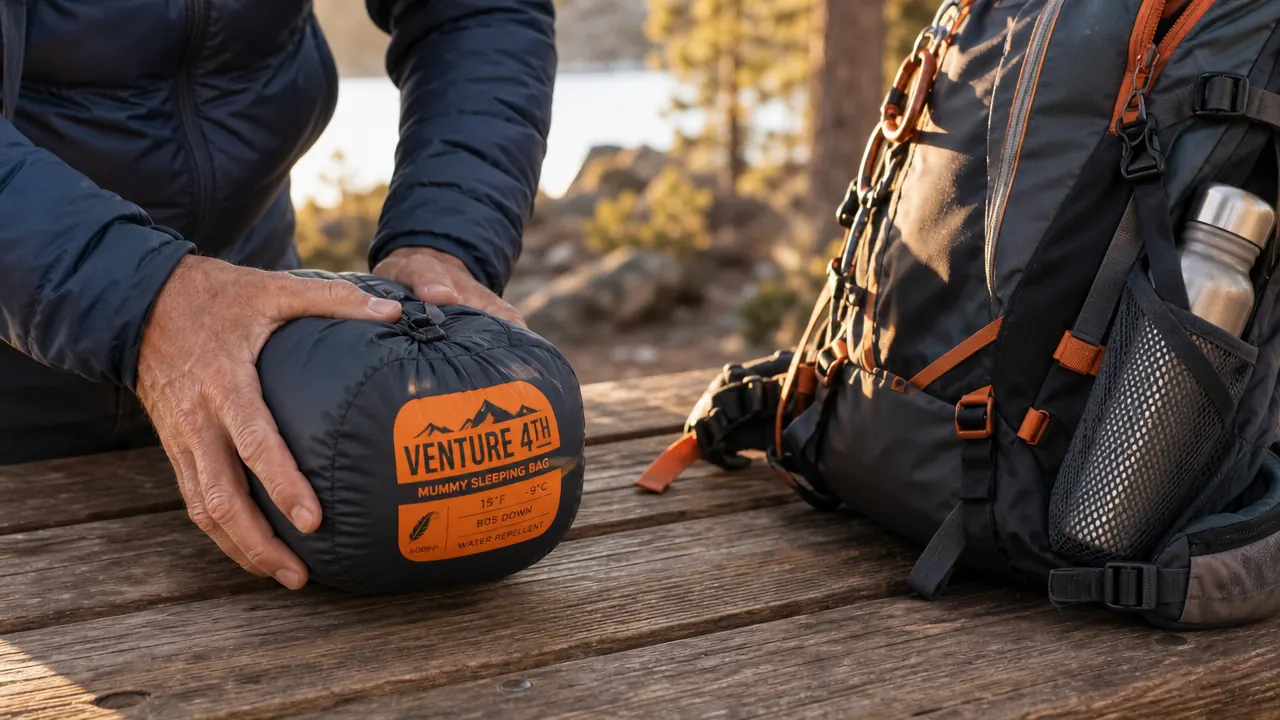
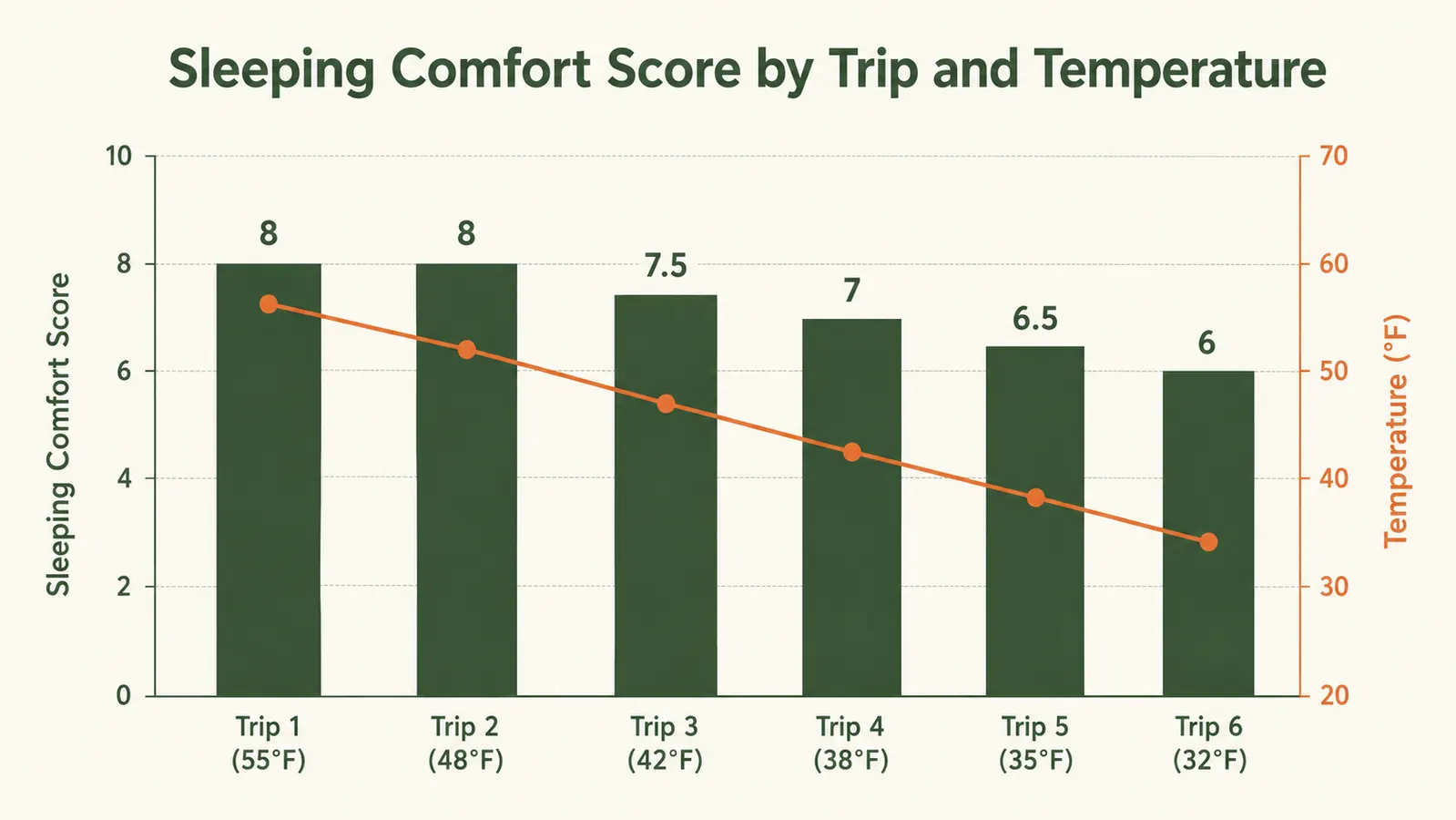
Here is the honest version. The VENTURE 4TH's 32-degree rating follows EN13537 standards on paper, which means it is the rating at which a standard adult male sleeper survives the night, not the temperature at which they sleep comfortably. In practice, I found my personal comfort floor to be around 38 to 40 degrees when I was sleeping without a liner and without a hat. Below that I was functional but not restful. The October cold snap at 27 degrees I described in the intro was manageable because I had added a wool base layer, a beanie, and a Therm-a-Rest pad with an R-value of 4.2. Take away those factors and 27 degrees would have been a rough night.
For summer camping, meaning overnights above 50 degrees, the bag is almost too warm. There is a full-length zipper that lets you vent one leg out, which helped on warmer nights in July and August. For the sweet spot of 40 to 60 degree nights, which covers most 3-season camping in most of the continental United States, the bag is genuinely comfortable without any supplemental layers.
For the sweet spot of 40 to 60 degree nights, which covers most 3-season camping in most of the US, this bag is genuinely comfortable. It earns its keep every single weekend.
Insulation, Loft, and Long-Term Fill Performance
The VENTURE 4TH uses a synthetic fill, not down. That is a deliberate choice by the brand and an honest tradeoff. Synthetic fill is heavier and bulkier than down at similar warmth ratings, but it keeps most of its insulating properties when wet. If you camp in the Pacific Northwest or anywhere that gets regular spring rain, that is a meaningful advantage. Down bags that get damp lose insulation fast and take a long time to dry in a damp camp environment.
After 30 trips and probably a dozen wash cycles, the loft has held up better than I expected. I have a cheaper synthetic bag from a big-box store that went pancake-flat after about a year of the same treatment. The VENTURE 4TH still fluffs up reasonably well when I shake it out of the stuff sack. The fill distribution is even, with no obvious cold spots or clumping after extended use. That said, synthetic bags do degrade over time no matter what. If you are washing it after every single trip, expect to see some loft reduction by year three or four.
Pack Size, Weight, and Real-World Packability
The VENTURE 4TH stuffs down to a workable size, roughly a large cantaloupe, in the included compression sack. It is not ultralight backpacking territory. The weight runs around 3.1 pounds for the regular version, which is heavier than a comparable temperature-rated down bag by a meaningful margin. For car camping and base camping where you are driving to a site or paddling in, that weight is irrelevant. For a 15-mile backpacking trip where every ounce counts, I would choose differently.
The compression stuff sack does its job, though it takes a little practice to get the bag seated right before you close the top. I found it easiest to stuff feet-first and work the air out as I go, rather than trying to fold it neatly. Once you figure out your technique it takes about 90 seconds from open bag to stowed. If I were doing longer backpacking trips with this bag, I would swap the included sack for a lighter dry bag to save a few ounces and add moisture protection.
Zipper Quality and Night-Use Details
This is one area where budget bags often cut corners and pay for it in bad reviews. The VENTURE 4TH's zipper has been mostly reliable across two seasons. I have had two minor snag incidents where the zipper caught the inner lining fabric near the footbox, which is a common failure point on mummy bags. Both times I was able to work it free in a few seconds without damage. No teeth have skipped and the pull tab is large enough to grab when wearing gloves, which matters more than it sounds when you are waking up at 2am and need to vent quickly.
The interior lining is soft against bare skin, which I appreciate. Some cheaper bags use a rougher polyester that feels like sleeping on a grocery bag. The hood cinches down well with a single drawcord and actually stays put through the night. The draft collar at the shoulder does a decent job blocking cold air from coming in at your neck, though it is not as robust as what you get on a 200-dollar bag.
One honest criticism: the mummy cut is somewhat snug in the shoulder and hip zone. I am 5'11 and not especially broad, and I still found the bag to feel slightly restrictive when I tried to roll onto my side. If you are a restless sleeper or you like to shift around at night, the tapered mummy shape takes some getting used to. VENTURE 4TH does offer a wide version, which I have not personally tested.
What I Liked
- Synthetic fill stays warm when damp, which matters for spring and fall camping in wet climates
- Soft interior lining is genuinely comfortable against bare skin
- Hood and draft collar stay in place through the night without constant adjustment
- Holds loft better than most bags in this price range after repeated wash and pack cycles
- Full-length zipper with large-grab pull tab works reliably in gloves
- Available in multiple sizes and two warmth ratings
Where It Falls Short
- True comfort floor is closer to 38-40F for cold sleepers, not the rated 32F
- Snug mummy cut can feel restrictive for restless or side sleepers
- Heavier than down bags at the same temperature rating, not ideal for ultralight backpacking
- Zipper has caught the lining fabric near the footbox on two occasions
Wash, Care, and Durability After Two Seasons
I have washed the VENTURE 4TH approximately 12 times over two seasons. I use a front-load washer on a gentle cycle with a synthetic-specific down wash (works fine on synthetic fills too) and I always dry on low heat with two clean tennis balls to break up any clumping. Following that routine, the bag has held up well. The shell fabric shows no signs of delamination, the stitching around the zipper baffles is intact, and the stuff sack compression straps are still holding strong. The outer fabric does pick up campfire smell deeply after a few seasons of use. That requires a second wash cycle to fully clear, not just a single run through.
How It Compares to What I Had Before
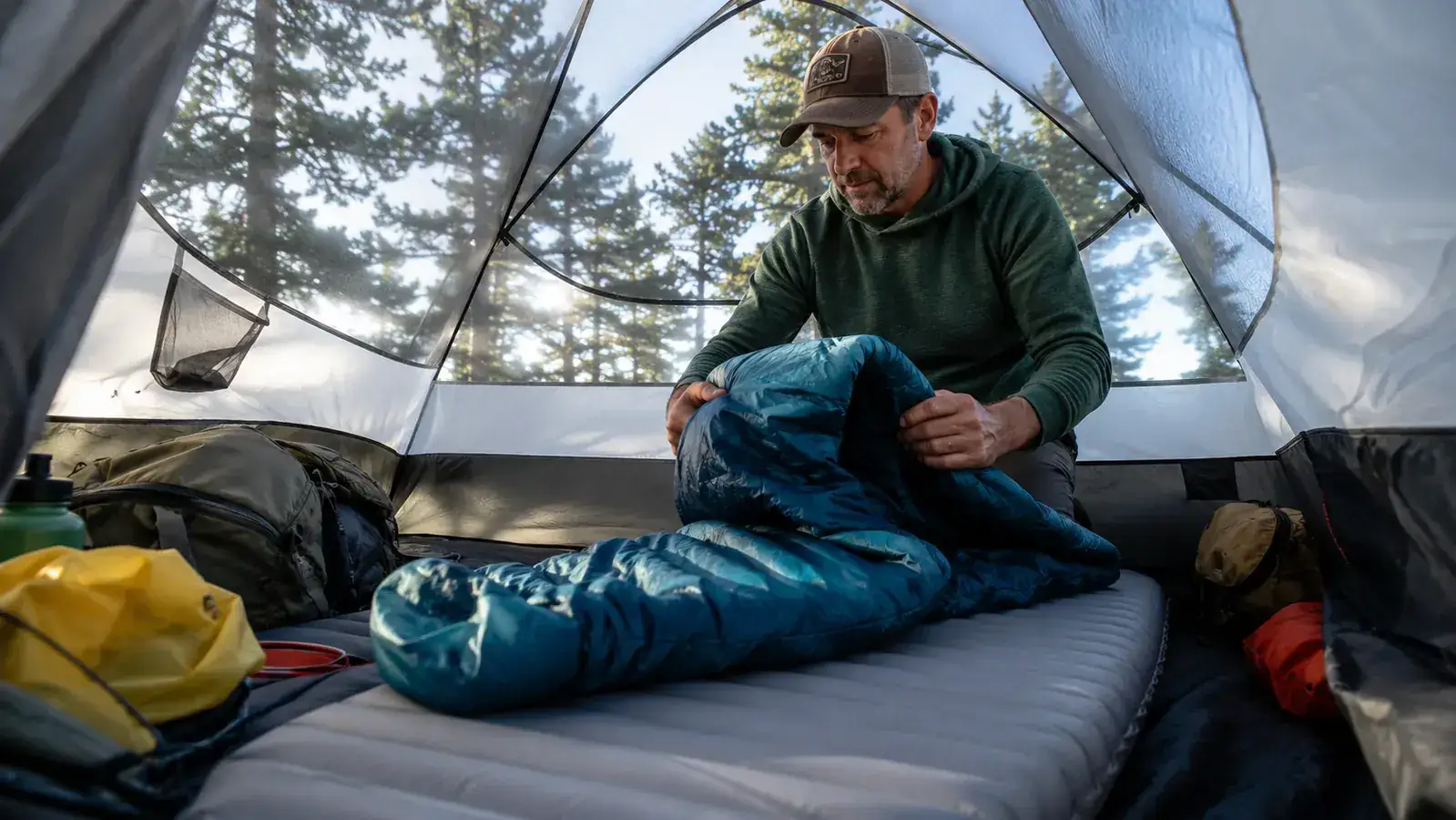
Before the VENTURE 4TH I was rotating between a 15-year-old Coleman semirect bag that had lost most of its loft and a down quilt I reserve for ultralight trips. The Coleman was dead weight. The down quilt is overkill for car camping where I want something I can throw around without worrying about moisture. The VENTURE 4TH slotted in exactly where I needed it: a reliable, tough, weather-tolerant bag that handles the 80% of camping where conditions are reasonable and you are not doing gram-counting math.
If you are cross-shopping this bag against other mummy bags in the 40-to-70-dollar range, see the full side-by-side breakdown in my VENTURE 4TH vs FARLAND comparison. And if you want to know how to layer properly around a bag like this for cold nights, the staying warm camping guide covers that in detail.
Who This Is For
The VENTURE 4TH makes the most sense for weekend car campers and base campers who want a reliable mummy bag that handles honest 3-season conditions without spending a lot of money. It also works well as a backup bag to keep in a vehicle for spontaneous trips, or as a primary bag for someone getting into camping for the first time who does not want to spend 150 to 200 dollars on a bag before they know how often they will actually use it. Families camping with older kids who need their own bag would also get good mileage here. The synthetic fill and the durability track record after two seasons make it a low-regret purchase for that crowd.
Who Should Skip It
If you are doing serious winter camping, meaning regular overnights below 28 degrees, this bag is the wrong tool. Step up to a zero-degree rated bag or a 15-degree bag with a liner system. If ultralight backpacking is your focus, the weight penalty of synthetic fill is too significant to ignore, and a down bag or quilt in the same warmth range will save you a pound. And if you are a tall, broad-shouldered person, order the wide version or test the fit first, because the standard mummy cut will cramp you.
Two seasons of honest use and it still earns a spot in my kit. Here is what it's running right now.
The VENTURE 4TH 3-season mummy bag has 4.6 stars from over 6,300 buyers. If you are looking for a reliable, weather-tolerant bag that covers 3-season camping without the down price premium, this is the one I would point you to.
Amazon Check Today's Price on Amazon →