
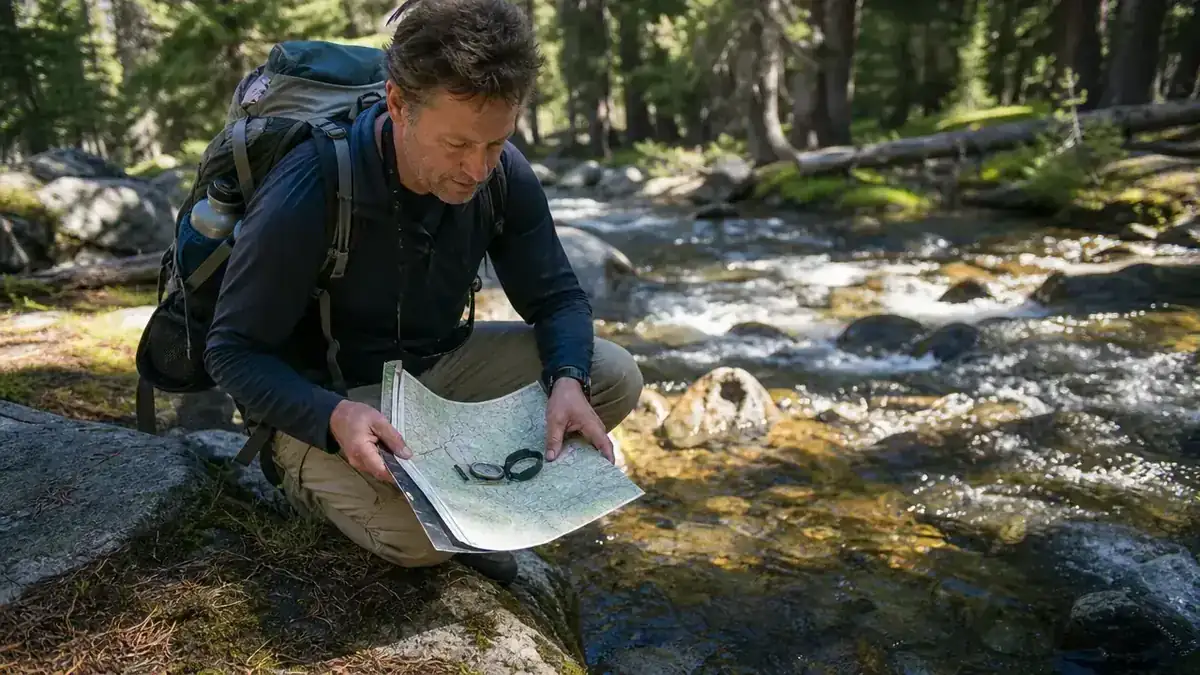
Most backcountry water problems are not about finding water. They are about finding water you can trust. I have been backpacking in the Pacific Northwest and the Rockies for over fifteen years and the single question I hear most from first-timers is some version of: 'Can I just drink from that stream?' Sometimes the answer is yes. Often it is a qualified yes, meaning yes if you treat it first. And occasionally it is a hard no. Knowing which situation you are in requires reading the landscape, understanding your gear, and being honest about the limits of what your filter can actually do.
The goal of this guide is to give you a clear, practical system for water in the field. We will cover how to identify better sources before you fill up, walk through five steps for treating water reliably, and be straight with you about exactly what a hollow-fiber filter like the LifeStraw removes and what it does not. This is not a scare piece. Backcountry water is generally safe when you treat it correctly. But 'correctly' matters.
The filter I carry on every trip -- at a price that makes it a no-brainer
The LifeStraw Personal Water Filter removes 99.999999% of bacteria, 99.999% of parasites, and microplastics down to 1 micron. Lightweight, no moving parts, no batteries. Over 124,000 reviews on Amazon. Current price is well under $20.
Amazon Check Today's Price on Amazon →Step 1: Read the Landscape Before You Reach for Your Bottle
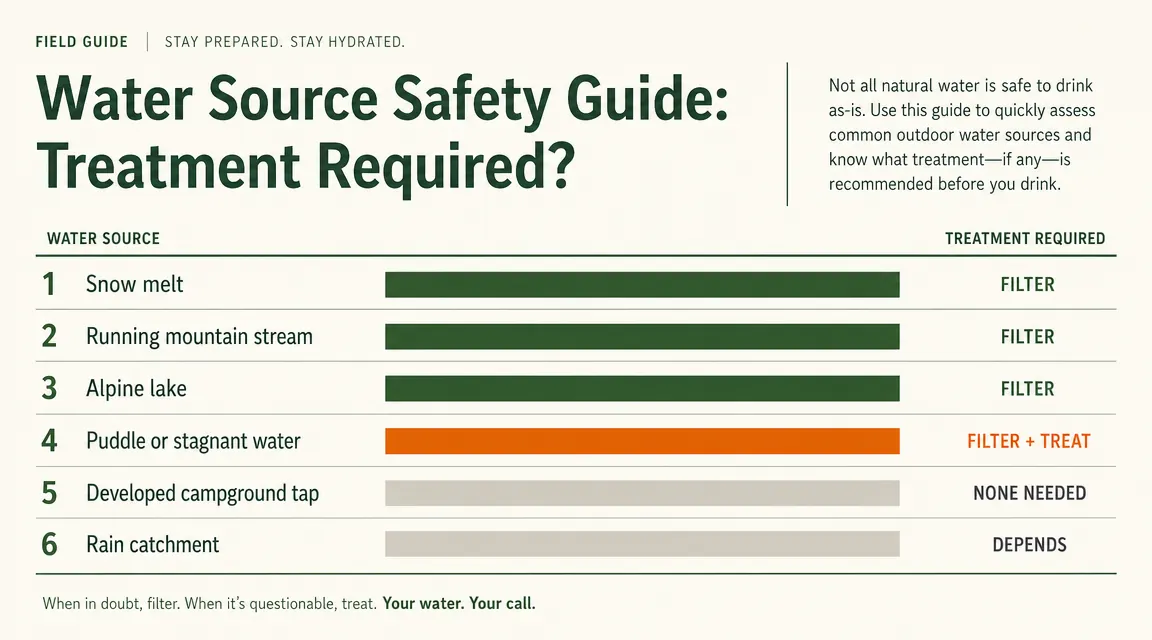
Not all water sources are equal, and the best filtering system in the world cannot compensate for choosing a terrible source. Before you fill your bottle or dip your filter, spend sixty seconds reading what is upstream. Moving water is generally safer than still water because flow limits bacterial concentration and algae growth. High-elevation sources fed by snowmelt tend to be cleaner than low-elevation sources running through meadows, pastures, or areas with heavy wildlife activity. If you can see the catchment area upstream and there is no obvious agricultural runoff, road drainage, or large animal wallows, you are starting from a better position.
Practical rules I follow: I prefer fast-moving streams over stagnant pools. I avoid water with an oily sheen or strong sulfur smell. I give myself at least 200 feet of upstream clearance from any campsite, privy, or established trail crossing. Bright green algae mats in a warm pool are a skip. None of this replaces treatment, but smart source selection is the first layer of your water safety system.
One thing to understand up front: in North America, the two organisms you are most commonly protecting against in backcountry water are Giardia lamblia and Cryptosporidium. Both are parasites. Both are removed by a good hollow-fiber filter. Bacteria like E. coli and Salmonella are also filtered. Viruses are a different story, and we will get to that in Step 4.
Step 2: Set Up Your Filter Correctly and Keep It From Freezing
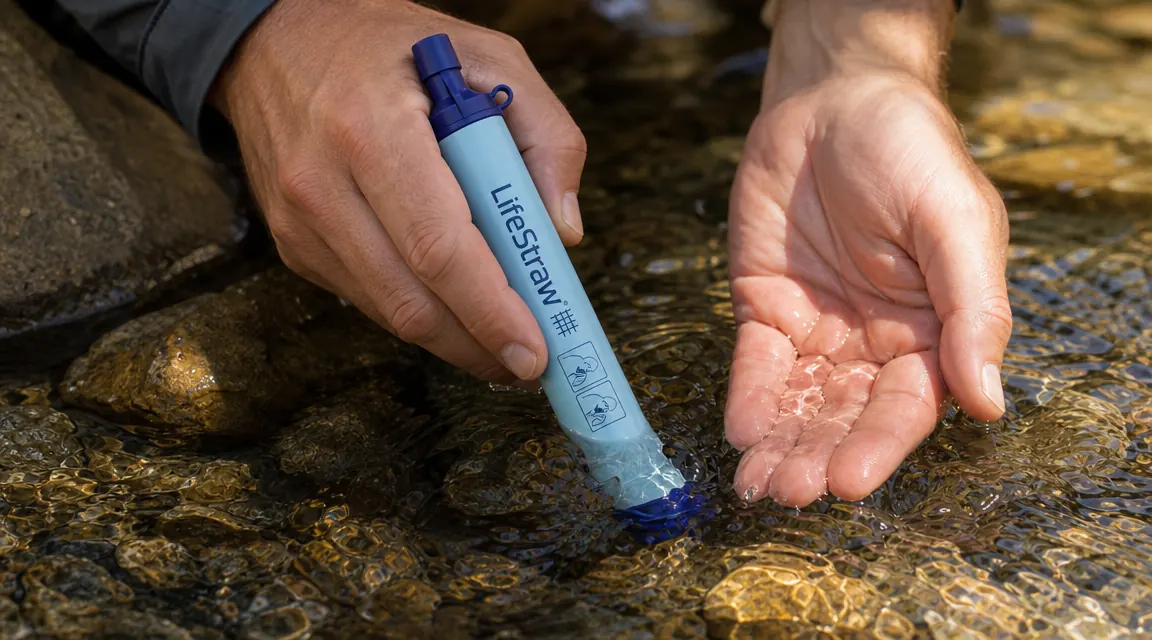
A hollow-fiber filter works by pushing water through thousands of tiny membrane tubes. The pores are 0.2 microns wide, which is small enough to block bacteria and parasites but large enough to let water molecules through at a usable flow rate. The LifeStraw Personal filter operates on the same principle: you submerge the intake end, draw water up through the straw with suction, and the membrane does the work. No pumping, no priming, no batteries.
Two setup habits that matter: First, always blow back through the filter after use to clear the membrane of debris. This backflushing step extends the life of the filter considerably and keeps flow rate from degrading over time. The LifeStraw is rated for 1,000 gallons, but you will get closer to that number if you backflush regularly. Second, never let a hollow-fiber filter freeze while it is wet. Ice forming inside the membrane physically damages the fibers and creates gaps large enough to let pathogens through. If you are camping in below-freezing temperatures, keep your filter inside your sleeping bag at night.
Step 3: Filter Your Water and Understand What Has Been Removed
Once you have a good source and your filter is in good shape, the actual filtration process is straightforward. For a straw-style filter like the LifeStraw, you either drink directly from the source or filter into a clean container. The membrane removes bacteria at a 99.999999% reduction rate and parasites including Giardia and Cryptosporidium at a 99.999% rate. It also removes microplastics down to 1 micron and reduces turbidity from sediment and particulate matter.
If your source is visibly silty or murky, let the sediment settle first or pre-filter through a bandana into a pot before running it through your main filter. Turbid water is not unsafe after filtering, but sediment loads up the membrane faster and shortens the functional lifespan of any filter. Clear water first, filter second. That sequence costs you a few minutes and saves you a filter.
The membrane on a hollow-fiber filter is doing real work. At 0.2 microns, it physically blocks Giardia, Cryptosporidium, E. coli, and microplastics. But water molecules slip right through. That is not a flaw in the design. That is the design.
Step 4: Know What Your Filter Does Not Remove -- and How to Handle It
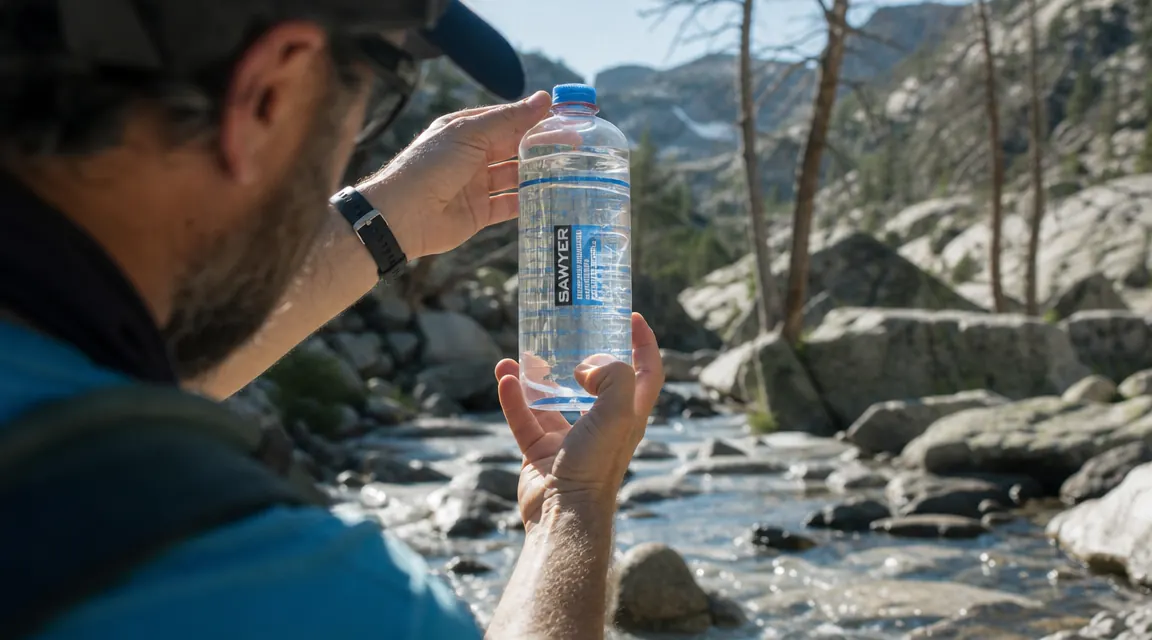
This is the part that most gear reviews gloss over, so I want to be direct with you. A hollow-fiber filter like the LifeStraw does not remove viruses. Viruses are simply too small to be caught by a 0.2-micron membrane. Common waterborne viruses include Hepatitis A, norovirus, and rotavirus. In most of North America, viruses in backcountry water sources are genuinely rare. The risk is low enough that most experienced backpackers in the US and Canada filter-only without losing sleep over it. But the risk is not zero, and in certain regions or circumstances it goes up significantly.
When should you add a second layer for virus coverage? International travel is the main trigger. Water sources in developing countries or areas without modern sanitation infrastructure carry higher viral contamination risk, and filter-only is not enough. Heavily trafficked wilderness areas near large population centers or areas with poor human waste management practices also warrant extra caution. In those situations, the options are chemical treatment (iodine tablets or Aquatabs), a UV pen like the SteriPen, or a combination filter-purifier like the Sawyer Squeeze with a chemical booster. The LifeStraw website is transparent about this limitation, and I respect them for it.
Chemical contamination is also outside the scope of a hollow-fiber filter. Agricultural runoff, mine drainage, and industrial pollution are not removed by any standard backcountry filter. This is not a LifeStraw-specific limitation. It applies to Sawyer, Katadyn, and every other hollow-fiber product on the market. If you suspect chemical contamination from upstream agriculture or industrial activity, the safest call is to find a different source. No filter is the right answer when the problem is heavy metals or herbicides.
Step 5: Build a Water Strategy That Matches Your Trip
The best water strategy is the one you will actually use consistently, not the one with the most theoretical coverage. For most backpacking in US wilderness areas, a hollow-fiber filter covers the realistic threats. The LifeStraw at its current price point is a smart choice for a first filter because the cost is low enough that carrying it as a backup after you upgrade to a squeeze-style filter for larger volumes makes total sense. I keep one in my emergency kit even now.
If your trips frequently involve high-volume water use, group camping, or international destinations, a gravity filter or squeeze bag system will make your life easier than a straw-style filter. If you are doing short overnights with a small pack and want the lightest possible setup with no moving parts, the LifeStraw at 2 ounces is hard to beat. And if you are heading somewhere with elevated viral risk, pair your filter with a packet of Aquatabs as a chemical backup. The tablets weigh almost nothing and cost about a dollar apiece.
A note on capacity planning: figure on 2 liters of water per person per day minimum for moderate activity, more in heat or at elevation. Know where your water sources are on the map before you leave camp, not when you are already thirsty. The biggest mistake I see people make is departing camp with a nearly empty bottle because they assume the next source will be close. Check your topo. Water sources shown on maps can be seasonal. In a dry year, a reliable spring from three seasons ago may be a muddy seep or nothing at all.
What Else Helps
Beyond the filter itself, a few habits make water collection easier and safer in the field. Carry two containers: one for raw unfiltered water and one that stays clean and treated-only. This sounds basic but it is surprisingly easy to contaminate your clean bottle by setting it down on a muddy bank or using the same hand that just handled a raw water bag. Color-coding your bottles by tying a piece of paracord on the unfiltered one takes ten seconds and eliminates a lot of confusion after a long day.
Learn to read topo maps for water sources before your trip, not on trail. Blue lines are perennial streams. Dashed blue lines are intermittent. Open circles with no blue line are springs that may or may not be flowing depending on season. Apps like Gaia GPS let you toggle water layers, and CalTopo has reliable contour data for most US wilderness areas. Cross-reference reported conditions in recent trip reports from AllTrails or ranger station updates. Fifteen minutes of pre-trip research prevents hours of detouring to find water on trail.
If you want to go deeper on the gear side of water filtration -- what the LifeStraw filters versus what it does not, how flow rate holds up over time, and how it compares to squeeze-style filters for multi-day trips -- the long-term review on this site covers four years of field use in detail.
And if you are building out your backcountry kit from scratch, the full case for never skipping a water filter covers 10 real scenarios where having one made the difference between a good trip and a miserable one.
If you carry one piece of water gear, make it this one
The LifeStraw Personal Water Filter weighs 2 ounces, needs no pumping or batteries, and filters up to 1,000 gallons. It removes bacteria, parasites, and microplastics. For most backpacking in North America, it covers the real risks. Check the current price on Amazon -- it has stayed well under $20 for years.
Amazon Check Today's Price on Amazon →