
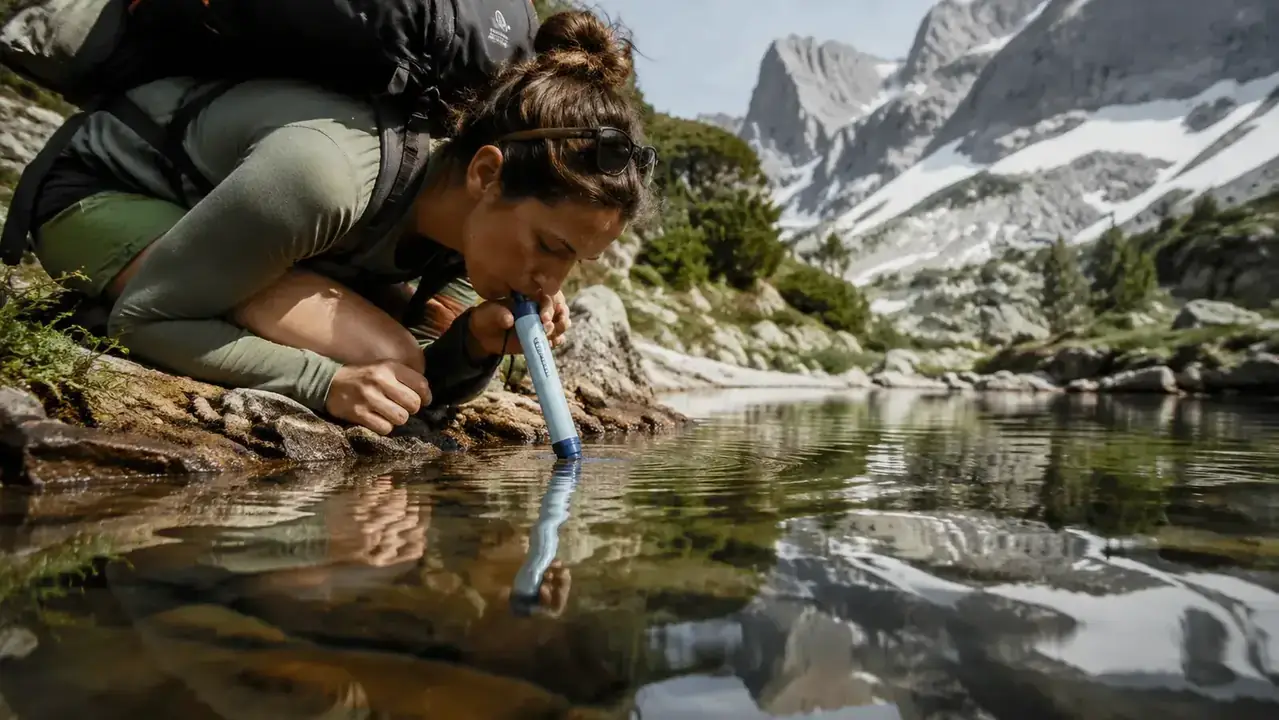
Four years ago I dropped a LifeStraw Personal Water Filter into my pack mostly as an emergency backup. I had a 2-liter squeeze filter I trusted more, and the LifeStraw seemed almost too simple to take seriously. Forty-something dollars of membrane inside a plastic straw. I figured I'd use it once, forget about it, and leave it rattling around in a side pocket forever.
That's not what happened. I'm writing this after a long weekend at a campsite in the Ozarks, where I filtered probably two gallons of creek water directly through the LifeStraw over three days. No squeeze bottle setup, no waiting for chemical treatment to kick in, no fumbling with hoses at 6 AM when I was still half asleep and just wanted coffee water. Just kneel, drink, done. The LifeStraw has become the filter I actually carry on solo day trips and shorter overnights because it weighs 2 ounces and takes up zero mental bandwidth.
The Quick Verdict
The best lightweight backup filter you can buy, and a legitimate primary filter for solo trips of two nights or less. Just know what it does not cover before you rely on it.
Amazon Check Today's Price →If you're heading into any backcountry water source, you need a filter in your pack
The LifeStraw Personal Water Filter weighs 2 oz, fits in any hip belt pocket, filters 1,000 gallons, and needs zero batteries, chemicals, or prep. Check current pricing on Amazon.
Amazon Check Today's Price on Amazon →How I've Used It
My main testing ground has been weekend backpacking in the Ozarks, the Ouachitas, and a few trips into the Rockies. I'm not a thru-hiker logging 2,500 miles a year. I'm a weekend warrior who gets out maybe 25 to 30 times a season, usually solo or with one other person. The LifeStraw has been on every trip for four years. Some trips I used it as my only filter. Others it was strictly backup insurance while I ran a squeeze filter for large-volume fills.
Over that span I've filtered water from fast-moving mountain creeks, slow cow-grazed lowland streams, standing pond edges (I do not recommend this as a primary plan), and one genuinely suspicious-looking puddle after a rainstorm stranded me short of my planned water source. The filter has never clogged to the point of being unusable. The flow rate has slowed on a few occasions after drawing from silty sources, but backflushing always brought it back. I've never had a waterborne illness I could trace to it, and I've filtered water from sources I would not touch without treatment.
I also ran a LifeStraw on a 4-day float trip down a river I won't name here, where I drank exclusively from the filter for two days to see how it held up under heavier sustained use. No issues. Slight suction resistance on day two that cleared immediately after a quick backflush by blowing air back through the mouthpiece.
What the LifeStraw Actually Filters
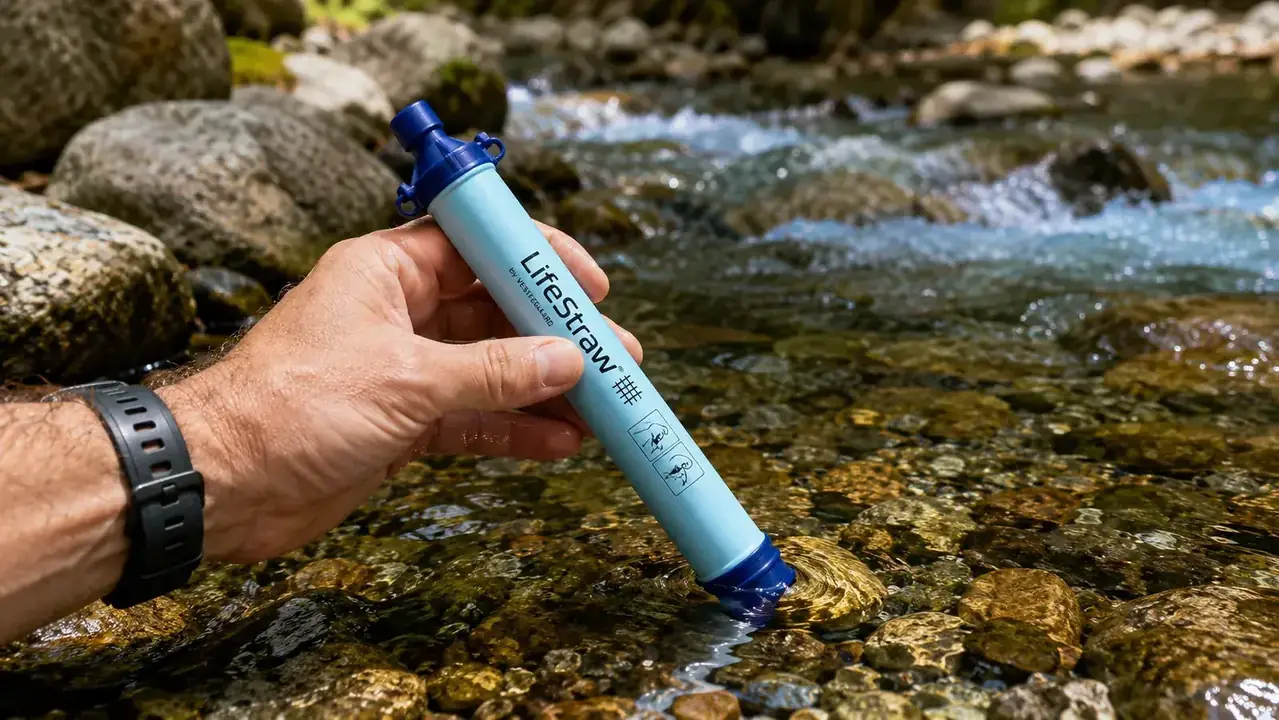
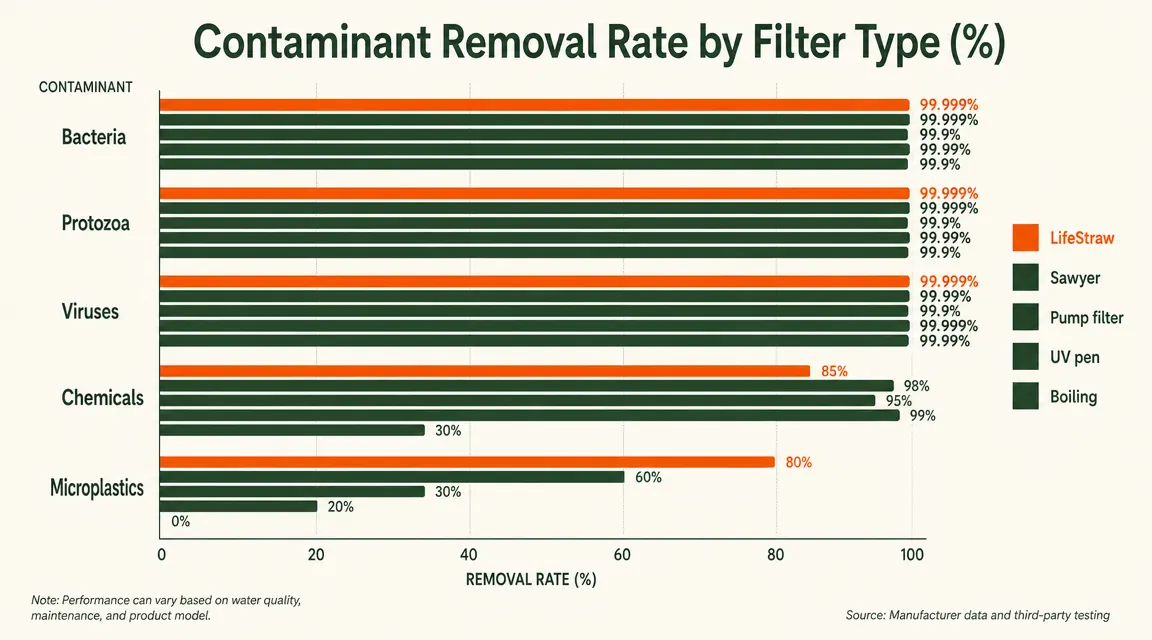
This is the most important section of this review, because the LifeStraw's limitations are not plastered on the packaging and a lot of people skip over them. The hollow-fiber membrane filters to 0.2 microns. That removes virtually all bacteria (including E. coli, salmonella, and campylobacter) and all protozoa (giardia, cryptosporidium). It also removes microplastics and sediment.
What it does not remove: viruses. Hepatitis A, norovirus, rotavirus. In North American backcountry water, viral contamination is genuinely rare in undeveloped areas. The CDC and most wilderness medicine resources consider backcountry NA water to be very low risk for viruses, and the bacteria and protozoa that DO live in it are exactly what the LifeStraw handles. But if you're traveling internationally, drawing water downstream of populated areas, or camping near livestock operations, you need to add a chemical treatment step (tablets or drops) or use a filter with a viricidal stage. The LifeStraw alone is not sufficient for those situations.
It also does not remove heavy metals, dissolved chemicals, or salt. It's a mechanical hollow-fiber filter, not an activated carbon block. For most wilderness water sources, this is a non-issue. For emergency urban water or industrial runoff, it's a real gap.
Flow Rate and Backflushing Over 4 Years
A brand new LifeStraw flows freely. You can draw water at a comfortable pace with normal suction. After about six months of regular use through silty or turbid sources, you'll notice some resistance. This is the hollow fibers clogging with particulate matter, which is normal and expected. The fix is backflushing: take the filter out of the water, cover the mouthpiece with your thumb, and blow air back through the bottom intake. You'll see cloudy water expel from the bottom. Repeat until it blows clear, then resume filtering. Takes about 20 seconds.
Over four years, I've backflushed my LifeStraw maybe 15 to 20 times. It has always restored adequate flow. I noticed a gradual, slight reduction in flow rate starting around year three that backflushing doesn't fully reverse, which is consistent with what I'd expect from a filter that's worked hard. The membrane still works, it's just a bit more effort. LifeStraw rates the filter for 1,000 gallons of water, and I suspect I'm somewhere in the 600 to 800 gallon range at this point. It still flows, still tests clear, and I'm comfortable continuing to use it.
One note on storage: the LifeStraw cannot freeze while wet. If moisture inside the hollow fibers freezes, it will burst the fibers and permanently destroy the filter. I store mine in a small zip-lock inside my sleeping bag on cold nights, and I blow it dry before putting it away at the end of any trip that might see freezing temps. This takes 30 seconds. Don't skip it.
In four years of Ozark and Ouachita backpacking, the LifeStraw has never once made me sick. That's the bottom line. But knowing exactly what it filters and what it doesn't is what makes you able to rely on it confidently.
The Straw-Only Design: Tradeoff Worth Understanding
The LifeStraw's defining characteristic is also its biggest limitation compared to competitors: it's a direct-drink straw filter. You can't filter water into a container. You can't fill your water bottle with it, hang a gravity bag, or set it up camp-style to fill multiple containers while you cook dinner. You have to kneel or crouch at the water source and drink in place, or submerge the filter into a container and drink from the other end.
For solo day hikes and short overnights, this is genuinely not a problem. You stop at a stream when you're thirsty, drink your fill, and move on. On a longer multi-day trip with a group, or any situation where you want to pre-filter water for camp cooking, it becomes a workflow issue. You can rig a workaround using a water bag and drinking tube, but at that point you might as well carry a Sawyer Squeeze or another bottle-based filter that handles volume filtering natively. I keep a dedicated squeeze filter for group trips and multi-day water-heavy carries. The LifeStraw lives in my kit for solo trips, day hikes, and emergency backup.
Durability and Build Quality
The LifeStraw is a simple piece of injection-molded plastic with a hollow-fiber membrane inside. There's nothing complex about it. The blue tube has held up well over four years of being knocked around a pack, dropped on rocks, and left to rattle in car doors. The caps on each end fit snugly enough that they've never come off accidentally in a pack, though they're not attached, so both are technically losable. I've already replaced one lost bottom cap with a piece of electrical tape on a trip, which worked fine.
The mouthpiece is comfortable enough for extended drinking sessions, though the hard plastic rim can get uncomfortable after five or six long draws. If you're filtering water for multiple people by passing it around, you'll want to wipe or rinse the mouthpiece between users. There's no sanitary cover beyond the slip-on cap.
Weight is 2.0 oz / 57 grams. That's lighter than most full water bottles empty. It'll add no meaningful weight to any kit. The form factor fits in every hip belt pocket I've tried, which is exactly where I want a filter: accessible without stopping to open a pack.
What I Liked
- 2 oz, fits in a hip belt pocket without thinking about it
- No setup, no moving parts, no batteries or chemicals needed
- Removes 99.999999% of bacteria and 99.9999% of protozoa, including giardia and cryptosporidium
- Rated for 1,000 gallons before replacement
- Backflushes easily to restore flow when it slows
- Works in any water temperature, including very cold mountain water
- Genuinely low current price makes it easy to keep a spare in every pack
Where It Falls Short
- Straw-only design cannot pre-filter water into a container or bottle
- Does not remove viruses (a real concern in international travel or near livestock/settlements)
- Flow rate gradually decreases over years of heavy use
- Both end caps are loose pieces that can be lost
- Cannot be used while frozen or stored wet in freezing conditions
Alternatives I Considered
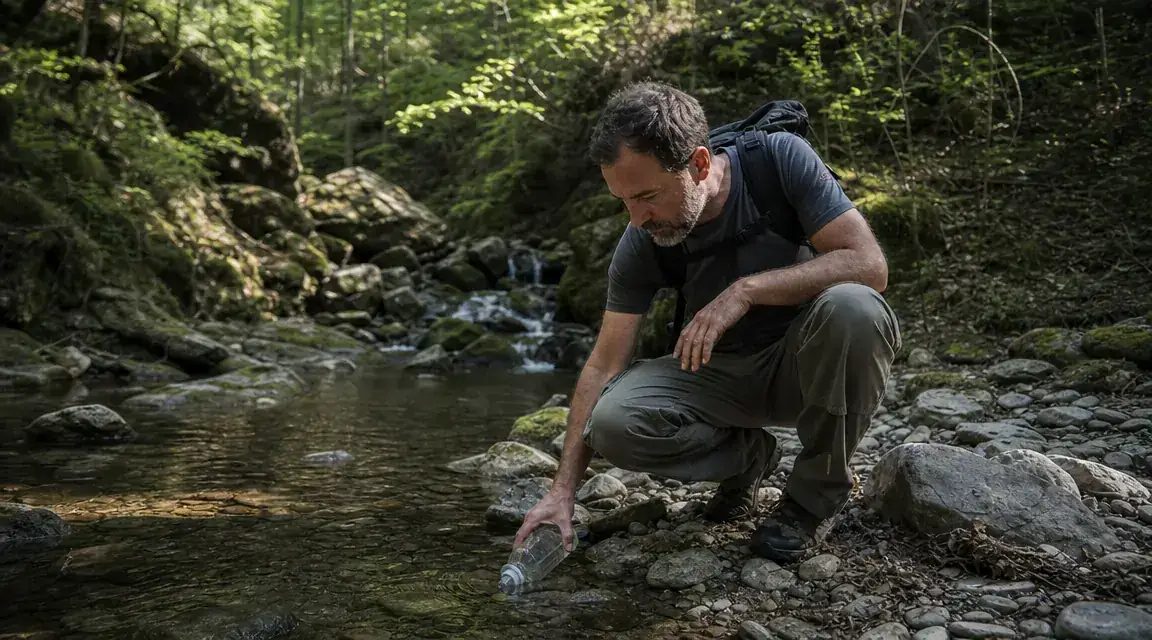
The Sawyer Squeeze is the other filter I use regularly, and if you need to compare the two head-to-head, I have a full breakdown at the LifeStraw vs Sawyer Squeeze comparison page. Short version: the Sawyer Squeeze wins on versatility because it can be used inline, with gravity bags, and to fill bottles. The LifeStraw wins on simplicity, pack weight, and cost. They serve different use cases, and I carry both depending on the trip.
The Katadyn BeFree is another competitor worth knowing about: it filters into a soft flask, so you get some container functionality the LifeStraw lacks. It's faster and more versatile for high-volume needs. It also costs more and the filter element has a shorter rated lifespan. For emergency backup or day hike use, the LifeStraw's simplicity and low cost win. For longer trips or group use, look at the BeFree or Squeeze.
Who This Is For
The LifeStraw is the right choice if you're a solo day hiker or weekend backpacker in North American backcountry, someone who wants an ultralight emergency water filter always in the pack, a parent looking for an easy first filter to put in a kid's daypack, or anyone who wants a low-cost second filter as a genuine backup to their primary system. At its current price, it's also the kind of thing you can keep one in your car, one in your daypack, and one in your go bag without it being a significant purchase. The cost-per-use on a 1,000-gallon rated filter that you buy once is genuinely very low.
Who Should Skip It
Skip the LifeStraw if you're primarily doing international travel in developing regions, camping consistently near agricultural areas, or planning multi-day group trips where you need to pre-filter large volumes into camp containers. None of those scenarios are impossible with a LifeStraw, but each requires either a workaround or a supplemental treatment step that adds friction. Also skip it as your only filter if you're camping in shoulder season in freezing temps and you're not diligent about storing it dry and warm at night. A busted LifeStraw from one freeze is a filter that gives you false confidence until you need it. If you want to learn more about how to safely source and treat backcountry water, see my full backcountry water guide.
The LifeStraw should be in every pack before it becomes the piece of gear you wish you had
At 2 oz and a 1,000-gallon rating, it's one of the few pieces of survival gear that also earns its place on ordinary weekend trips. Check today's price on Amazon and see what other buyers are saying.
Amazon Check Today's Price on Amazon →