
Let me tell you the thing most reviews skip. The VENTURE 4TH mummy bag says 32 degrees Fahrenheit on the tag. If you take that at face value, pack it for a late-September trip in the Cascades, and actually hit 32-degree nights, you are going to be cold. Not hypothermia cold, but definitely curled-up-tight, wide-awake-at-3am cold. That is not a flaw unique to VENTURE 4TH. It is how the whole budget synthetic bag industry works. But most reviewers write around it instead of naming it plainly, and I think that does people a disservice.
I have spent three years pointing weekend campers and first-time backpackers toward specific gear at a campsite I host in the Blue Ridge. I get real feedback from real people who slept in these bags, often the very next morning over coffee. The VENTURE 4TH has come up more than any other sleeping bag in that span, because at its price point with 6,000-plus Amazon ratings at 4.6 stars, it is the default recommendation everyone finds online. Some of those people had great nights. Some did not. The split is entirely predictable once you understand what you are actually buying.
The Quick Verdict
A genuinely solid 3-season bag for warm-weather and mild-shoulder-season trips, undercut by an optimistic temperature rating and a snug cut that does not work for every body type. Buy it knowing those limits and you will be happy.
Amazon Check Today's Price →Before You Freeze at 3am, Read the Rest of This Review
The VENTURE 4TH is worth its price for the right person. Check current availability below, then keep reading so you know whether that person is you.
Amazon Check Today's Price on Amazon →How I Have Tested and Observed This Bag
My own use of the VENTURE 4TH spans two size variants. I have camped with the regular adult version across temperatures ranging from 38 to 62 degrees Fahrenheit, mostly in the Appalachians and twice in the Smokies during October. Beyond my own nights, I have watched or debriefed probably 30 other campers who brought this exact bag to the campsite I host, ranging from first-timers in their twenties to parents buying gear for teenage kids. I have also read through several hundred Amazon reviews specifically looking for negative or neutral feedback, which is where you find the honest data after you filter out the five-star reviews from people who used the bag in a cabin.
What I am writing here is the review-b angle: not the long-term durability story, but the stuff nobody tells you before you click buy. If you want to know how it holds up over two full seasons of weekend use, the other piece on this site covers that ground. Here I am going to focus on the temperature rating problem, the fit issue, what the insulation actually does, and the profile of buyer who is genuinely well-served by this bag versus the one who ends up returning it.
The Temperature Rating Problem: What 32 Degrees Actually Means
The tag says 32 degrees. In the sleeping bag industry, that number is usually a survival rating, not a comfort rating. EN 13537 and ISO 23537 certification gives you both a comfort rating and a lower-limit rating. The VENTURE 4TH is not EN or ISO certified. Its stated rating is almost certainly a lower-limit estimate, which means a fit, average-sleeping adult male can survive the night at that temperature without being comfortable. For most people, the real comfort floor is closer to 45 to 50 degrees Fahrenheit.
That is not a small gap. It is 15 to 18 degrees. For car camping in May or June in most of the continental US, it does not matter because you are rarely hitting 32 anyway. For a backpacker planning a September trip in the Pacific Northwest or the Rockies, that gap can mean a miserable night or, in a wet year, a real risk. I tell every camper I meet: if the forecast low is at or below 45 degrees, add a liner or a base layer, or choose a different bag. The VENTURE 4TH at 32 degrees is not a 32-degree bag for most people.
The real comfort floor for most adults in this bag is closer to 45 to 50 degrees, not 32. That gap is not a defect. It is just how unrated synthetic bags work. Know it before you book a late-season trip.
The Fit: Why Mummy Bags Are Not One-Size-Fits-All
The regular size fits most adults up to 6 feet tall. That is accurate. What the listing does not say clearly enough is that the shoulder and hip girth is cut for a slim-to-average frame. A broader-shouldered person or anyone over roughly 200 to 210 pounds is going to find this bag restrictive in a way that affects sleep quality. When you are pinned in a tight mummy bag, you cannot turn naturally without fighting the zipper and the shell. That movement interruption across a full night compounds into poor sleep, which then makes you feel colder even if the temperature is technically within range.
VENTURE 4TH does sell a wide option. If you are over six feet or carry more than around 200 pounds, go straight for it. Do not assume the regular will stretch to fit. Mummy bags are cut deliberately tight because dead air space warms faster, which is thermally sound engineering. But that engineering assumes a specific body profile. The wide version is a few dollars more and worth every one of them if you are in that range.
One more fit note: the hood. The cinch cord on the hood draws down to a tight seal around your face, which is good for warmth retention. But several people I have talked to described it as claustrophobic on their first night, especially if they are not used to mummy-style bags. It loosens up in feel after a trip or two, but if you are the type of sleeper who needs to feel like you can roll freely, this style in general is going to be an adjustment.
What Budget Synthetic Insulation Gives You and Takes Away
The VENTURE 4TH uses a synthetic hollow-fiber fill rather than down. For the budget camping market, that is the right call and here is why: synthetic insulation retains a meaningful portion of its insulating ability when wet, down collapses when damp and loses most of its warmth. For car campers who are not obsessively managing condensation, or for anyone camping in humid conditions, synthetic is the safer choice. It also dries faster if you do get it wet.
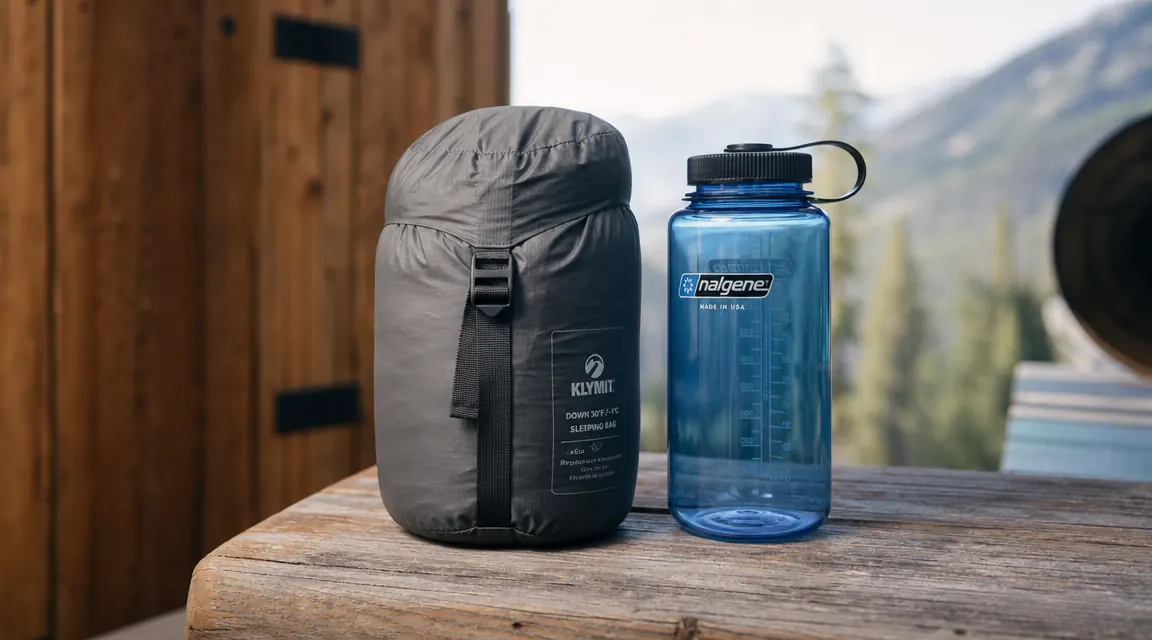
The tradeoff is weight and pack size. Budget synthetic fill at this price is not the same as PrimaLoft Gold or Thermo-Plume technology. It is a heavier, bulkier, less compressible material. The VENTURE 4TH stuff sack compresses the bag to roughly the size of a large Nalgene bottle, which is fine for car camping or attaching to the outside of a frame pack. If you are an ounce-counting ultralight backpacker trying to keep your sleep system under 2 pounds, you have already outgrown this bag. But for the majority of weekend campers who are not weighing their gear obsessively, the bulk-to-warmth ratio is acceptable.
There is also a long-term loft question. Synthetic fill compresses over repeated use and storage, and it does not recover the way premium down does. After consistent use for a season and a half, you will start to notice slightly reduced loft compared to day one. It is gradual, not sudden. But it is one more reason the temperature rating gets less reliable the longer you own the bag. Down on the other hand, treated properly, can last a decade without significant loft degradation. At the price point, that tradeoff makes complete sense. Just understand you are probably looking at a 3 to 5 year bag, not a 10-year bag.
Zipper and Build Quality: The Underrated Detail
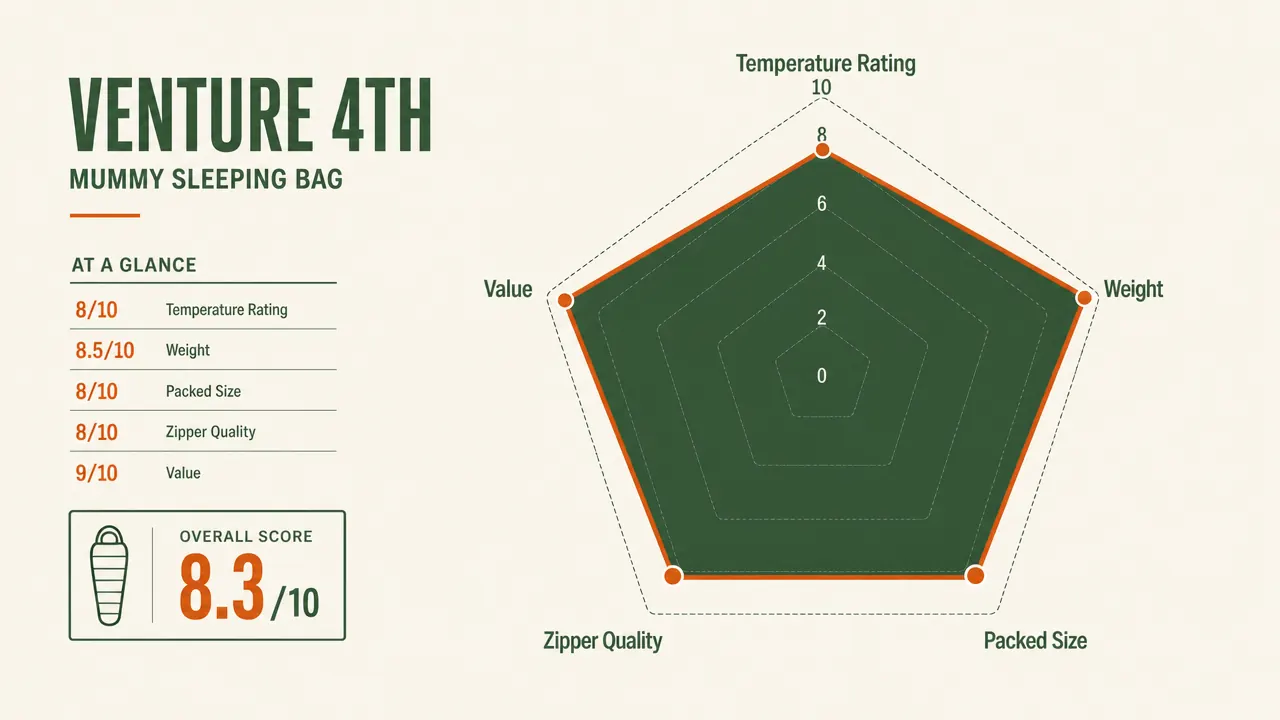
The zipper runs the full length of the bag, from the foot box up to the hood, with an anti-snag baffle on the inside. In my use and in the campers I have debriefed, the zipper has been a non-issue. It moves smoothly, the anti-snag design actually works most of the time, and I have not heard a single report of zipper failure. That is worth saying clearly because zipper quality is the single most common failure mode in budget sleeping bags, and VENTURE 4TH has clearly put some attention there.
The outer shell fabric is a standard ripstop polyester. It is not silky-smooth like a more expensive bag, but it is durable and repels light moisture. The foot box is reinforced, which matters because that is usually the first place budget bags show wear. Nothing about the construction feels precious or fragile. It feels like a tool, which is exactly what a $54 sleeping bag should feel like.
What I Liked
- Synthetic fill stays warm when damp, a real advantage in humid or rainy conditions
- Zipper is consistently reliable with an effective anti-snag baffle
- Foot box is reinforced and holds up to repeated use
- Wide size variant available for broader frames and taller adults
- Packs to a reasonable stuff-sack size for car camping and frame packs
- Extremely competitive value at this price point for 3-season car camping
Where It Falls Short
- Temperature rating is survival-level, not comfort-level, real floor is closer to 45 to 50 degrees for most sleepers
- Regular cut runs snug through the shoulders and hips, limiting movement for larger frames
- Synthetic fill lofts less efficiently than down and compresses with age over 3 to 5 years
- Heavier and bulkier than ultralight options, not suited for ounce-conscious backpackers
- Hood cinch-down can feel claustrophobic for first-time mummy bag users
Who This Is For
The VENTURE 4TH is genuinely well-suited for the camper who sleeps in a tent from late spring through early fall, in conditions where nighttime lows stay above 45 degrees most of the time. That covers a huge swath of the US camping calendar. It is also a strong buy for anyone camping in humid or rainy climates where a down bag would be riskier to manage. First-time backpackers who want a real mummy bag without a big financial commitment will find this a legitimate entry point. So will parents buying a bag for a teenager heading to summer camp or a first trip with a school group. And anyone who currently uses a rectangular bag and wants to experience what a properly fitted mummy design does for warmth efficiency should try this one before spending three times the money.
Who Should Skip It
If you are a cold sleeper, meaning you typically run colder than average and need the environment to be genuinely warm before you sleep well, this bag is not for you. Get something rated to 15 or 20 degrees with a certification to back it up. If your trips regularly involve nights below 40 degrees, same advice. If you are over 6 feet or significantly over 200 pounds and do not want to size up, you will fight the fit every night. And if you are building an ultralight kit and paying close attention to base weight, budget your sleep system differently. The VENTURE 4TH is excellent in its lane. But its lane has clear edges, and you should know where they are before you test them at 11,000 feet in October.
Know Your Limits, Know Your Bag, Sleep Well
For 3-season car camping and mild-shoulder-season trips above 45 degrees, the VENTURE 4TH is one of the best buys at this price point. Check the current price and size options on Amazon.
Amazon Check Today's Price on Amazon →